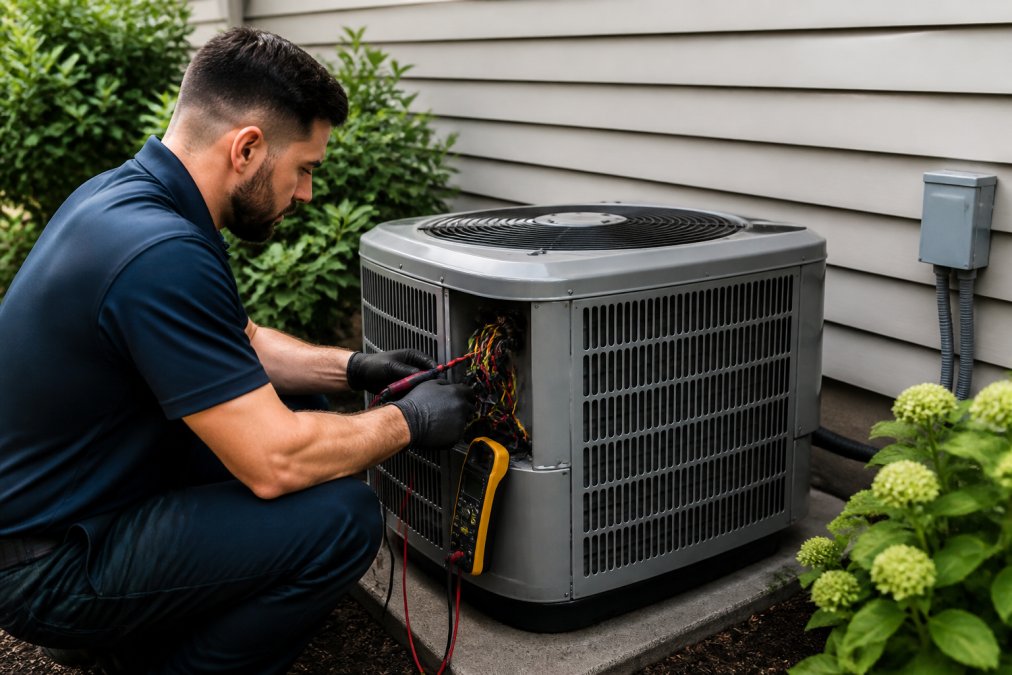
 blog
blog
Affordable HVAC Repair Services NJ: What to Expect
Table of Contents
- What Makes HVAC Repair Services in NJ Affordable
- The HVAC Diagnostic Process Explained
- DIY HVAC Troubleshooting Checklist Before You Call
- When to Replace vs Repair an HVAC System
- HVAC Maintenance Checklist for Homeowners
- How to Spot Affordable HVAC Repair Services in NJ
- Frequently Asked Questions
Last Updated: September 23, 2026
What Makes HVAC Repair Services in NJ Affordable
Affordable hvac repair services nj homeowners can count on come down to diagnosis quality, not discount pricing. A repair that fixes the actual failed component costs less over time than a cheap visit that treats a symptom.
- Accurate diagnosis first. A technician who tests the system instead of guessing at it finds the real failure point.
- Repair before replacement. Plenty of systems that get condemned could run several more years with the right part.
- Written recommendations. You should leave the visit knowing exactly what was found and what it costs to fix.
The HVAC Diagnostic Process Explained
The hvac diagnostic process explained in plain terms: a technician tests the system's electrical, mechanical, and airflow components in sequence to isolate the failure, then documents findings before recommending any work.
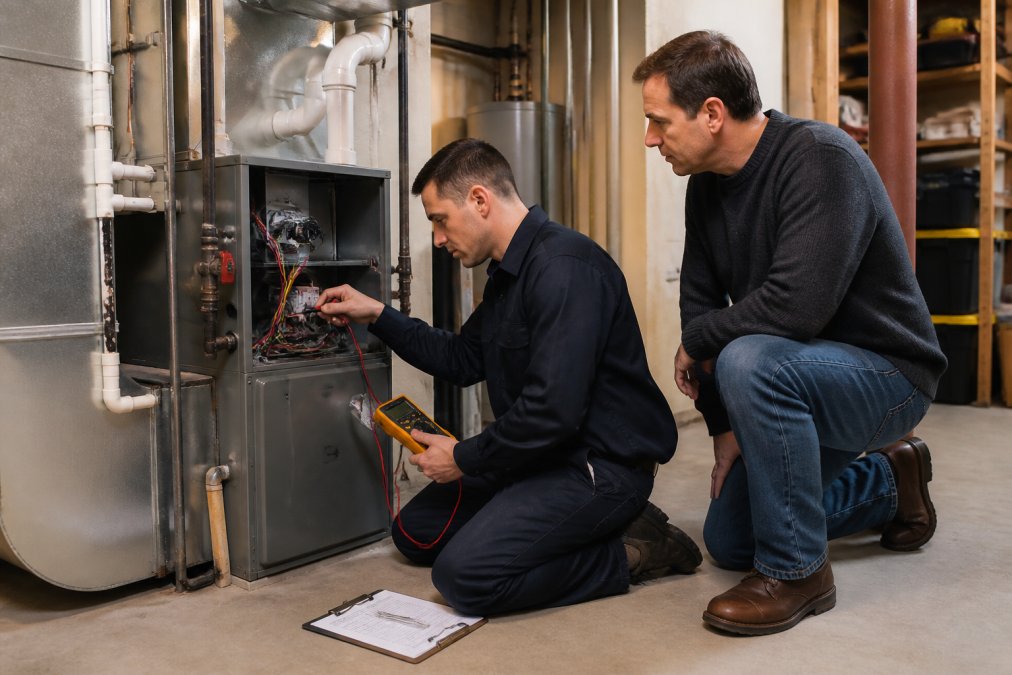
What Happens During a Professional Diagnostic Visit
A professional diagnostic visit follows a predictable order: interview about symptoms, inspect the equipment, then run instrumented tests.
Expect these steps:
- Symptom review. When did it start, what noises or smells, which rooms are affected.
- Visual inspection. Filters, belts, connections, corrosion, refrigerant lines, and the condition of the ductwork itself.
- Electrical testing. Capacitors, contactors, control boards, and voltage at each stage.
- Refrigerant or combustion checks. Depending on whether it's cooling or heating equipment.
- Written findings. What failed, what's marginal, and what can wait.
DIY HVAC Troubleshooting Checklist Before You Call
Before scheduling a service call, run this checklist. Some "breakdowns" are simple fixes, and ruling those out saves you a diagnostic fee.
- Check the thermostat batteries and confirm it's set to the correct mode (heat or cool)
- Replace the air filter if it's visibly loaded with dust
- Confirm the circuit breaker for the unit hasn't tripped
- Check the emergency shutoff switch near the furnace or air handler
- Look for ice buildup on the outdoor AC unit and turn it off if present
- Verify supply vents are open and not blocked by furniture
- Listen for unusual sounds: grinding, clicking, or repeated short cycling
- Note any error codes on the thermostat or control board
When to Replace vs Repair an HVAC System
The repair-versus-replace decision hinges on age, repair frequency, and efficiency. As a general rule, a single repair on a system under ten years old is worth doing; repeated repairs on a system past fifteen years usually aren't.
Use this framework:
| Situation | Recommended Action | Why |
|---|---|---|
| Under 10 years, first major repair | Repair | Remaining service life justifies the part |
| 10-15 years, one repair | Repair, then monitor | Still cost-effective, watch for repeats |
| 15+ years, second repair in two years | Consider replacement | Rising repair frequency signals end of life |
| Any age, failed compressor or heat exchanger | Get both options quoted | Major component failure changes the math |
| 10+ years, efficiency complaints | Compare repair vs. high-efficiency replacement | Newer equipment can cut operating costs |
The Cost Categories That Drive the Decision
You won't get a real number without a diagnostic, but you can understand the shape of the cost by knowing which tier the failure falls into:
- Minor electrical components. Capacitors, contactors, relays, and fuses are the most common failures and the least expensive to fix, single-part swaps usually completed in one visit.
- Motors and blowers. Blower, inducer, and condenser fan motors cost more in parts and take longer to replace. Availability matters, an oddball motor may need to be ordered.
- Refrigerant-side problems. A leaking Schrader valve or small line-set leak is a repair. A leaking evaporator coil is often a replacement conversation, since the labor to access it can approach the cost of a new coil assembly.
- Compressor and heat exchanger. These two failures flip the math. A compressor replacement on an older system rarely makes sense once you account for refrigerant, labor, and the age of the rest of the system. A cracked heat exchanger is a safety issue, not a cost decision, and replacement is usually the only responsible path.
- Control boards and communicating systems. Modern variable-speed equipment uses proprietary boards that can be expensive and slow to source. On a 15-year-old system, a failed board can trigger replacement.
Efficiency Rebates and Tax Credits Worth Checking
This can move the math on a high-efficiency replacement.
- Federal tax credits. The Inflation Reduction Act created federal tax credits for qualifying high-efficiency heat pumps, central air conditioners, furnaces, and water heaters (Home energy tax credits). Credit percentage and annual cap depend on equipment category and efficiency tier, and the rules have been updated since launch, check current IRS and Department of Energy guidance before you buy.
- State and utility programs. New Jersey runs energy-efficiency programs through the Board of Public Utilities and utility-administered efficiency programs, historically offering rebates on qualifying heat pumps, furnaces, and water heaters, plus home energy assessment incentives. Program names, amounts, and eligible equipment lists change, so verify current terms before assuming a rebate applies.
- Manufacturer rebates. Equipment manufacturers frequently run seasonal promotions on specific model lines. These stack with federal and utility incentives in many cases.
- Utility on-bill financing. Some utilities offer low- or zero-interest financing for qualifying efficiency upgrades, repaid through the monthly bill.
Before approving a replacement, ask the contractor which incentives the proposed equipment qualifies for and whether they'll document the install for rebate paperwork. A contractor who can't answer is leaving money on the table.
Two Honest Caveats
First, if you plan to stay long-term, a high-efficiency replacement can pay back through lower utility bills, though the timeline depends on usage, local rates, and which incentives you qualify for.
HVAC Maintenance Checklist for Homeowners
An hvac maintenance checklist for homeowners works best on a seasonal rhythm: filter changes monthly during heavy use, professional tune-ups twice a year, and a quick visual inspection each season.
Here's a schedule you can actually keep:
| Task | Frequency | Who Does It |
|---|---|---|
| Replace or clean air filter | Every 1-3 months | Homeowner |
| Visual inspection of outdoor unit | Spring and fall | Homeowner |
| Clear debris from around condenser | Monthly in warm months | Homeowner |
| Professional heating tune-up | Once per year, before winter | Technician |
| Professional cooling tune-up | Once per year, before summer | Technician |
| Check thermostat calibration | Annually | Technician |
| Annually | Technician |
How to Spot Affordable HVAC Repair Services in NJ
Affordable HVAC repair services in NJ share a few recognizable traits: they diagnose before quoting, put recommendations in writing, and don't pressure you toward replacement on the first visit. But "affordable" is a loaded word in this trade, and the companies that earn it are transparent about pricing, credentials, and how they handle the repair-versus-replace middle.
What "Affordable" Actually Means in This Trade
A low diagnostic fee means nothing if the diagnosis is wrong, and a cheap capacitor swap means nothing if the real failure was the contactor burning it out. Homeowners who spend the least over five years pay for accurate testing up front.
- Flat-rate pricing. The company publishes a price book and quotes a fixed number before work begins. Predictable, but the price book covers overhead, so line items can look higher than an hourly shop.
- Time-and-materials. You pay the technician's hours plus parts markup. Cheaper on simple jobs, but can balloon on diagnostic-heavy ones.
- Diagnostic fee credited toward repair. The trip charge is applied to the repair if you approve the work. Ask whether the credit expires and whether it applies to parts, labor, or both.
Credentials to Verify Before You Book
New Jersey requires HVAC contractors to hold a Home Improvement Contractor registration through the Division of Consumer Affairs, and the master HVACR license is issued by the State Board of Examiners of Heating, Ventilating, Air Conditioning and Refrigeration Contractors. A legitimate operator will give you the license number without hesitation, and you can look it up in the state's public license lookup.
Ask these questions before you book:
- What's your license number, and is it a master HVACR license or a journeyman working under one? Only a master can pull permits and supervise work.
- Are you registered as a Home Improvement Contractor? Required for most residential work above a small threshold.
- Will I get a written estimate before work starts? You should know what you're approving before anyone touches the system.
- Do you charge a diagnostic fee, and does it apply to the repair? Policies vary, so ask upfront whether the credit is capped.
- What's your emergency response window? If you're calling at 2 a.m. in January, you want a real answer, not a promise.
- Do you offer financing on larger jobs? Flexible financing spreads out the cost of a system replacement.
The Questions That Separate Real Contractors From Lead Brokers
Many pages ranking for HVAC repair queries aren't contractors at all, they're lead-generation networks that sell your contact information to whichever local shop pays. Spot them by a few tells:
- The phone number is a toll-free line, not a local exchange.
- The address is a P.O. box or a virtual office suite.
- The site lists dozens of unrelated trades under one brand.
- The technician who shows up is in an unmarked vehicle and can't produce a license number on request.
Service Area Reality Check
One more thing worth checking: whether the company services your specific county. A provider covering only part of North Jersey may still take your call, but response time won't match a local contractor's. Ask for the towns they cover that week, not the counties on their website, dispatch radius changes with weather and staffing.
Frequently Asked Questions
What should I look for when hiring an HVAC repair company?
Check for a valid state HVAC license, proof of bonding and insurance, and clear written recommendations before work begins. Ask whether the technician explains the diagnosis before quoting repairs. A trustworthy company puts findings in writing so you can decide without pressure. Also confirm how emergency calls are handled and whether the company serves your county, since coverage varies across the region.
How often should I schedule HVAC maintenance to avoid costly repairs?
Most manufacturers recommend a tune-up twice a year: cooling service in spring and heating service in fall. Regular maintenance keeps the system running at peak efficiency, catches worn parts before they fail, and can extend equipment life. Skipping tune-ups often leads to bigger breakdowns during peak season, when emergency repairs are harder to schedule and less convenient for your household.
How do I know if I need an HVAC repair or a full system replacement?
Age and repair history are the best indicators. Systems under 10 to 12 years old with a single failed component usually just need a repair. If your unit is older, needs frequent repairs, or uses outdated refrigerant, replacement may be more economical long term. A technician can walk you through both options in writing so you can compare before deciding.
What does 'upfront, job-based pricing' mean for my repair bill?
It means you should receive a written quote for the specific job. Ask the dispatcher to confirm this when you book. If a company cannot explain its pricing structure clearly on the phone, that is a sign to keep looking. Transparent providers put the scope and price in writing so there are no surprises at the end.
When your system fails in the middle of a cold snap or a heat wave, the last thing you need is a vague quote and a sales pitch. Tornado HVAC provides 24/7 emergency service, clear written recommendations, and dependable workmanship across North Jersey, along with maintenance plans that keep systems running through the seasons. Schedule service with Tornado HVAC and get a straight answer about what your system actually needs.