 blog
blog
Certified HVAC Installation Services: 2026 Buyer's Guide
Table of Contents
- What Certified HVAC Installation Services Actually Include
- NATE Certified HVAC Technicians: What the Credential Proves
- HVAC Installation Permit Requirements You Should Expect
- Sizing and Load Calculation Transparency
- HVAC System Replacement Checklist: From Quote to Walkthrough
- Incentives and Tax Credits: What to Gather Before You Sign
- What to Ignore When Comparing Installation Quotes
- Frequently Asked Questions
Last Updated: September 24, 2026
What Certified HVAC Installation Services Actually Include
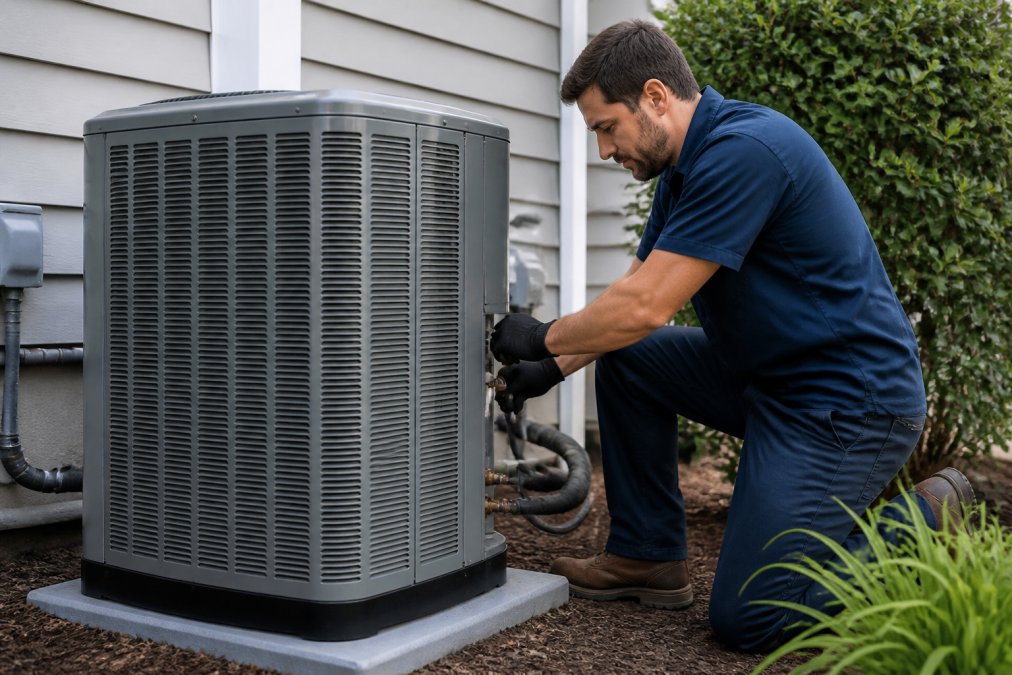
Certified hvac installation services are the design, permitting, installation, and commissioning work performed by a licensed contractor who holds recognized technical credentials and pulls the required local permits. That definition matters because a new system is only as good as the process behind it.
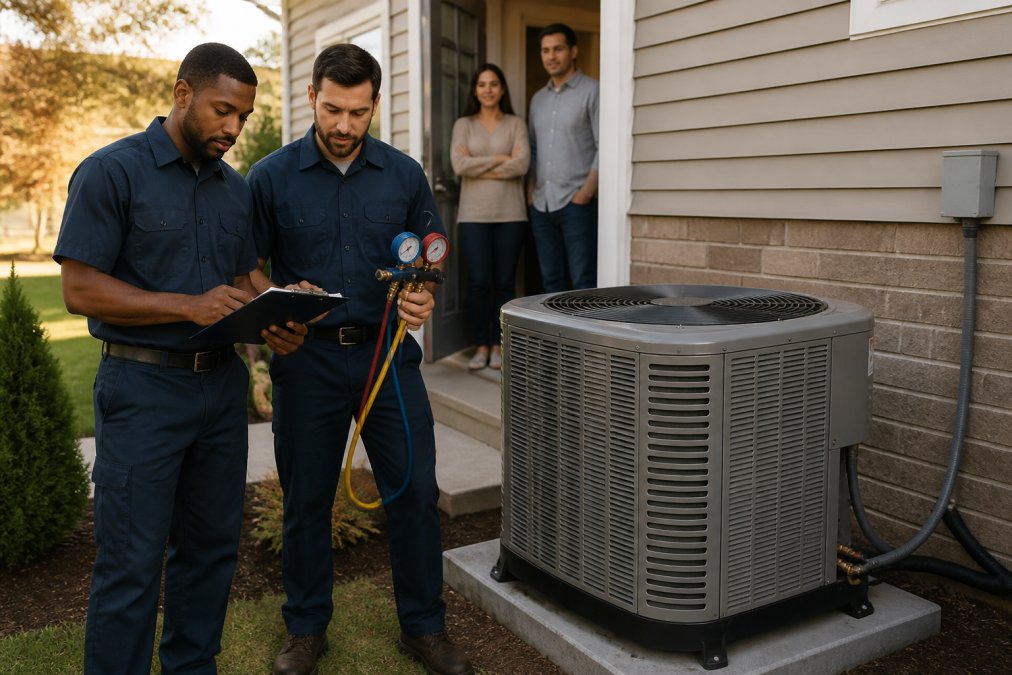
- A room-by-room load calculation before any equipment is chosen
- Ductwork inspection and any needed sealing or modification
- Mechanical, electrical, and gas permits pulled in the homeowner's name
- Refrigerant handling by a technician certified under federal rules
- Startup, commissioning, and a documented performance check
Beyond the Box: Design, Permits, and Commissioning
Design is where installations succeed or fail. A contractor who sizes equipment by square footage alone is guessing. Proper HVAC design starts with a load calculation, then moves to equipment selection, air distribution layout, and a commissioning plan.
NATE Certified HVAC Technicians: What the Credential Proves
NATE certified HVAC technicians have passed independent, third-party testing on specific equipment categories. NATE, North American Technician Excellence, is the largest non-profit certification body for HVAC technicians, and its exams are written by industry subject-matter experts rather than by any single manufacturer or employer. The credential is not a license. It is proof that a technician's technical knowledge was tested by an organization outside their own company.
The Certification Tracks and What Each One Covers
NATE certifications are organized by equipment type and by role, and the specific track a technician holds tells you what they were actually tested on:
- Air Conditioning, cooling-specific diagnostics, refrigerant cycle, electrical controls
- Heat Pump, heating and cooling modes, defrost cycles, auxiliary heat
- Gas Heating, combustion, venting, gas pressure, ignition systems
- Air Distribution, airflow, static pressure, duct design principles
- Senior and Master Specialist, advanced tiers requiring additional exams and documented field experience
How to Verify a Technician's Certification
Verification is straightforward and you can do it before work begins:
- Ask for the technician's full name and NATE identification number.
- Look up the number through NATE's public certification lookup.
- Confirm the certification is current, NATE credentials require renewal, and an expired certification is not a valid one.
- Confirm the track matches the equipment being installed.
Licensing, Bonding, and Insurance: Three Different Checks
These three get lumped together constantly, and they are not the same thing.
- Licensing proves the business and qualifying technician met state requirements to perform HVAC work.
- Bonding protects you if the company fails to complete the job or violates a contract term.
- Insurance covers property damage and injuries that happen on your property during the work.
Other Credentials You May See
NATE is not the only credential in the field, and knowing what the others mean helps you read a bid accurately:
- EPA Section 608 certification, required by federal law for any technician who handles refrigerants. This is a legal requirement, not a mark of extra skill, but every technician on a refrigerant job must hold it.
- Manufacturer certifications, training specific to one brand's equipment. Useful for warranty work, but narrower than NATE because it is tied to a single product line.
- State or local licenses, the legal permission to operate, separate from any technical certification.
HVAC Installation Permit Requirements You Should Expect
HVAC installation permit requirements vary by municipality, but most jurisdictions require a mechanical permit for equipment replacement and a separate electrical or gas permit when those systems are modified. The permit is not paperwork for its own sake. It triggers an inspection that confirms the work meets current code.
Sizing and Load Calculation Transparency
System sizing should follow a documented load calculation, not a rule of thumb. This is one of the clearest signals of a professional installation, and it is also the step most quotes skip entirely.
HVAC System Replacement Checklist: From Quote to Walkthrough
Use this checklist to move from quote to final walkthrough without surprises. Each step has a clear owner, each one produces a document you should keep, and each one has a way for you to verify it was done, not just claimed.
| Step | What Happens | Who Owns It | What You Should Receive | How to Verify It |
|---|---|---|---|---|
| 1. Load calculation | Room-by-room sizing analysis | Contractor | Written calculation summary | Confirm it lists room-by-room figures, not one total |
| 2. Written scope | Equipment, labor, and exclusions listed | Contractor | Itemized proposal | Check that model numbers and exclusions are spelled out |
| 3. Permits | Mechanical, electrical, gas as needed | Contractor | Permit number | Look up the number with your local building department |
| 4. Installation | Removal, install, connections, sealing | Crew | Work completed per scope | Walk the site and confirm the scope items are present |
| 5. Commissioning | Airflow, charge, and temperature checks | Technician | Startup report | Confirm the report contains actual measured readings |
| 6. Walkthrough | System demo and filter guidance | Technician | Signed completion document | Ask questions until you can operate the system yourself |
Post-Installation Performance Verification
Performance verification is the step that separates a finished installation from a completed one. This is where most guides stop, and it is where you have the most leverage as a homeowner. After startup, the technician should measure and record a defined set of readings. Ask for these in writing, and know what each one tells you:
- Static pressure, the resistance the blower works against. High static pressure means the system is fighting restricted airflow, which shortens equipment life and raises energy use.
- Airflow at each register, confirms the duct system actually delivers air to every room, not just the ones closest to the unit.
- Refrigerant charge against the nameplate, an undercharged or overcharged system still runs, but the compressor works harder than it should.
- Temperature split between return and supply air, a simple check that the system is moving heat the way it is designed to.
- System reaching setpoint, confirms the equipment can actually satisfy the thermostat, not just turn on.
A Homeowner's Verification Checklist for the First Week
You do not need instruments to catch the most common post-installation problems. In the first week of operation, check these yourself:
- Room-to-room temperature, walk the house with a thermometer. Large differences between rooms point to airflow or balancing issues.
- Runtime and cycling, a system that runs constantly in mild weather, or short-cycles on and off, is a sign of a sizing or charge problem.
- Condensate drainage, confirm the drain line is discharging and there is no standing water near the indoor unit.
- Filter fit and access, make sure the filter is the correct size and you can change it without tools or guesswork.
- Thermostat behavior, verify the schedule and setpoints match what you were shown at the walkthrough.
- Noise and vibration, new rattles or hums after the first few days can indicate a loose panel or connection.
Incentives and Tax Credits: What to Gather Before You Sign
Federal and utility incentives for high-efficiency equipment change regularly, and eligibility depends on equipment ratings, not on the brand name on the truck. Before you sign a contract, collect the documentation you will need to claim anything available to you.
Gather these items:
- The equipment model and serial numbers
- The manufacturer's efficiency ratings for the specific model installed
- The installation date and invoice
- Any contractor certification the program requires
What to Ignore When Comparing Installation Quotes
The lowest line item is rarely the lowest total cost. When you compare bids, weigh the scope and the process, not just the number at the bottom.
Ignore these:
- Quotes with no load calculation attached
- Bids that exclude permits without saying so
- Prices quoted without model numbers
- Promises that a permit "isn't needed for a swap"
- Any proposal with no commissioning step listed
Frequently Asked Questions
What certifications should a professional HVAC installer hold?
At minimum, look for a state-issued license, NATE certification, and EPA Section 608 certification for anyone handling refrigerant. NATE certification covers areas like air conditioning, heat pumps, gas heating, and air distribution, so the specific badges matter depending on what is being installed. Ask to see the credentials before work begins, and confirm they are current rather than expired.
Does HVAC installation require a permit in my area?
Most municipalities require a mechanical permit for a system replacement, and some also require an electrical permit for the disconnect and circuit. Permit rules vary by town, so ask the contractor who pulls the permit and how the inspection is scheduled. A certified HVAC installation service will include the permit and inspection in the written scope rather than leaving it to the homeowner.
Can I legally install my own HVAC system?
In most states, homeowners can perform some work on their own property, but refrigerant handling requires EPA Section 608 certification, and many jurisdictions restrict gas connections and electrical work to licensed trades. Even where a homeowner installation is technically allowed, warranty coverage often depends on professional installation. For a full system replacement, hiring a licensed contractor is the practical path.
What is a load calculation, and why does it matter for system sizing?
A load calculation measures how much heating and cooling a home actually needs based on square footage, insulation, window area, orientation, and ductwork. Contractors use it to size equipment correctly. A system that is too large short-cycles, which wears out parts and leaves rooms uneven; one that is too small runs constantly. Ask for the load calculation in writing before you approve a replacement.
Replacing a heating or cooling system is a decision you live with for the next 15 years, and the quality of the installation matters more than the logo on the equipment. Tornado HVAC provides certified installation with written load calculations, permit handling, and a documented commissioning report, backed by 24/7 emergency service and maintenance plans that keep your system performing. Schedule service with Tornado HVAC and get a written recommendation before any work begins.