 blog
blog
Residential HVAC Installation Service Booking Guide
Table of Contents
- How Residential HVAC Installation Service Booking Works
- What Happens During the In-Home Consultation
- Load Calculation and System Sizing
- Average Cost to Replace Home HVAC System: What Drives the Number
- Questions to Ask HVAC Contractors Before Booking
- The HVAC Installation Timeline, From Booking to First Run
- How to Prepare for HVAC Installation
- Financing, Maintenance Plans, and Energy Efficiency ROI
- Frequently Asked Questions
Last Updated: September 16, 2026
How Residential HVAC Installation Service Booking Works
Residential HVAC installation service booking is the process of scheduling a qualified contractor to assess, size, and replace your home's heating and cooling system. At Tornado HVAC, we've walked North Jersey homeowners through this process, and the pattern is always the same: the booking call is easy, but the first 48 hours decide whether you get the right system or an expensive mistake.
Here's the short version. You call, you get a visit, you get a written recommendation, and only then do you commit. Any contractor who wants a deposit before seeing your home is skipping a step you can't afford to skip.
The stakes are higher than most homeowners realize. A system that's sized wrong runs longer, wears out faster, and never quite keeps the upstairs comfortable in July. The U.S. Department of Energy maintains guidance on proper sizing and system selection that every reputable installer should be following, and it's worth reading before you make any calls.
Below, we'll walk through how booking works, what drives the cost, what to ask before you sign, and how to prepare for installation day.
What Happens During the In-Home Consultation
The in-home consultation is a diagnostic visit, not a sales pitch. A technician measures your living space, checks insulation, inspects windows and doors, examines existing equipment, and looks at the ductwork and electrical panel. Expect 60 to 90 minutes.
A contractor who spends 20 minutes and hands you a number is guessing; one who spends an hour and a half is building a picture of how your home actually loses and gains heat.
A common mistake is letting the conversation drift to equipment brands. Brand matters less than sizing and installation quality. Ask instead about airflow, return ducts, and whether your existing ductwork can handle the new system's capacity.
If you've been burned before by a company pushing a full replacement when a repair would do, say so upfront.
Load Calculation and System Sizing
A load calculation determines how much heating and cooling capacity your home needs, based on square footage, insulation, window area, ceiling height, and local climate. The industry standard is a Manual J calculation, which produces a BTU figure your contractor matches to equipment.
Average Cost to Replace Home HVAC System: What Drives the Number
The average cost to replace a home HVAC system depends on system type, capacity, ductwork condition, efficiency rating, and installation complexity. Any contractor who quotes one over the phone is guessing.
Here's what actually moves the figure:
| Cost Driver | Why It Changes the Number |
|---|---|
| System type | Furnace, boiler, heat pump, or central air each carry different equipment and labor needs |
| Capacity | Larger homes need larger equipment and more labor hours |
| Efficiency rating | Higher-efficiency equipment costs more upfront and less to run |
| Ductwork condition | Sealing, repairing, or reconfiguring ducts adds scope |
| Electrical and venting | Panel upgrades or new flue runs change the job |
| Installation complexity | Tight attics, crawlspaces, and roofline access add time |
How to Read a Quote Line by Line
Most homeowners compare the bottom-line number and stop there. Two quotes for the "same" system can differ by thousands of dollars in scope that isn't visible until installation day. When you review a written estimate, check for these line items:
- Equipment model number, not just brand and tonnage. Model numbers tell you the actual efficiency tier and whether the unit qualifies for any utility rebate.
- Line-set and refrigerant handling. Reusing an old line set is sometimes fine and sometimes not; the quote should say which and why.
- Condensate management. A new drain pan, float switch, or condensate pump is a small line item that prevents a large water-damage problem.
- Combustion air and venting for furnaces and boilers. If the quote doesn't mention venting, ask whether the existing flue is compatible with the new unit.
- Permit and inspection fees, listed separately so you know who is pulling the permit.
- Disposal and haul-away of the old equipment.
- Commissioning and airflow verification after startup, not just "test run."
The Efficiency ROI Question, Answered Honestly
- Your current system's efficiency tier. Replacing a unit from the 1990s or early 2000s offers a large gap; replacing something from the last decade means a smaller gap and longer payback.
- Your utility rates and usage pattern. A home that runs heating eight months a year sees a different payback than one that runs cooling eight months a year.
- How long you plan to stay. If you're selling in two years, the math rarely favors the top efficiency tier.
For current guidance on heating and cooling efficiency, the DOE's energy saver guidance on heating and cooling is a useful starting point, and our team can give you a written, job-based quote after seeing the property.
Questions to Ask HVAC Contractors Before Booking
Before you book any installation, get answers to these questions in writing. They separate contractors who do the work properly from those who cut corners.
- Will you perform a full load calculation, and will I receive a copy?
- What's included in the quote: equipment, labor, permits, disposal, and any ductwork changes?
- Is the estimate itemized, or a single lump sum?
- How long will the installation take, and will my home be habitable throughout?
- What parts and labor warranty applies, and what voids it?
- Are you licensed and insured in this state, and can I see the numbers?
- Who handles the permit, and who schedules the inspection?
- What happens if the system doesn't perform as specified?
The HVAC Installation Timeline, From Booking to First Run
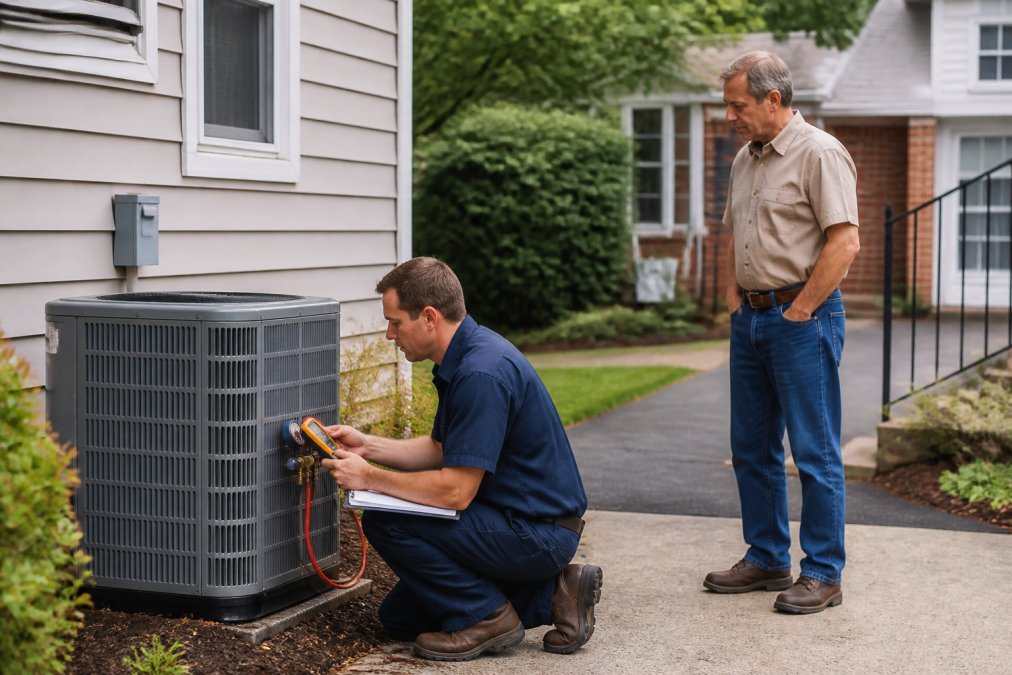
A typical residential installation runs three to five days from booking to first run, though complex jobs or equipment orders can extend that. Here's how it usually breaks down.
What Actually Happens on Installation Day
Most homeowners are anxious about the 4-6 hour window when the crew is in the house. Here's the sequence, so nothing surprises you.
Installation Day Checklist
- Clear a path to the furnace, attic access, and outdoor unit
- Move vehicles out of the driveway and work area
- Secure pets in a closed room away from the crew
- Remove wall hangings near ductwork runs
- Confirm someone will be home for the final walkthrough
- Have your thermostat manual and Wi-Fi password ready
- Ask the crew lead for the permit and license numbers
- Ask for the commissioning readings before the crew leaves
How to Prepare for HVAC Installation
Preparing for installation is mostly about access and expectations. Clear the work area, plan for noise and a few hours without climate control, and confirm who will be home for the final commissioning walkthrough.
A few specifics that save headaches:
- Empty the closet or utility space around the indoor unit
- If the attic or crawlspace is the access point, clear stored items near the hatch
- Expect the power to be off for part of the day
- Plan for the outdoor unit pad to be clear of landscaping, hoses, and downspouts
- Keep children and pets out of the work zone, especially during refrigerant handling
Financing, Maintenance Plans, and Energy Efficiency ROI
Financing and maintenance plans change the real cost of ownership more than most homeowners expect. Flexible financing spreads the upfront cost, while a maintenance plan protects equipment and keeps efficiency from degrading.
Frequently Asked Questions
What should I look for when booking an HVAC installation professional?
Check licensing and insurance, ask whether the technician performs a load calculation before recommending equipment, and request a written, itemized estimate. Ask how long the crew has worked together, whether permits are pulled, and what parts and labor warranty covers the new system. A provider that answers these questions clearly and puts everything in writing before work begins is usually the safer booking.
How do I prepare my home for an HVAC installation appointment?
Clear a path to the furnace, air handler, and outdoor condenser, and move furniture, plants, and breakables at least three feet away. Secure pets in a closed room, unlock gates, and confirm someone over 18 will be home. If the thermostat is being replaced, note your Wi-Fi password. Expect the power to be off for part of the day, so plan around any home-office or medical equipment needs.
How long does residential HVAC installation take from booking to completion?
A straightforward changeout of a furnace or central air unit often finishes in one day, while a full system replacement with ductwork changes can run two to four days. Scheduling depends on equipment availability and permit timing, which can add a week or more in peak season. Booking early in spring or fall usually shortens the wait between your service appointment and installation day.
Can I get a no-obligation estimate before I commit to booking?
Yes, and you should ask for one. A written, no-obligation estimate should list equipment model numbers, system capacity, labor, permit fees, and any ductwork or thermostat upgrades quoted separately. Ask whether the price is job-based before work starts, and whether the contractor offers flexible financing. Compare at least two written estimates before you sign anything.