 ultimate-guide
AC Repair Union County NJ: 2026 Guide to Fast, Local Service
Table of Contents
- 24/7 Emergency AC Repair in Union County: What Happens When You Call
- HVAC Diagnostic Services: How Technicians Find the Real Problem
- DIY Troubleshooting Checklist Before You Call for AC Repair
- Central Air Conditioning Maintenance: Why Union County Homeowners Schedule It Twice a Year
- When to Replace an HVAC System Instead of Repairing It
- What Affects the Cost of AC Repair and Replacement
- Why Local Climate and Coverage Matter for Union County Homes
- Frequently Asked Questions
Last Updated: September 30, 2026
24/7 Emergency AC Repair in Union County: What Happens When You Call
When your air conditioner quits on a 95-degree July afternoon in Union County, you want AC repair Union County homeowners can count on, with a real person on the phone and a technician who can get there. AC repair Union County NJ homeowners can count on starts with a dispatcher who gathers your address, system type, and symptoms, then routes the closest available technician to your door.
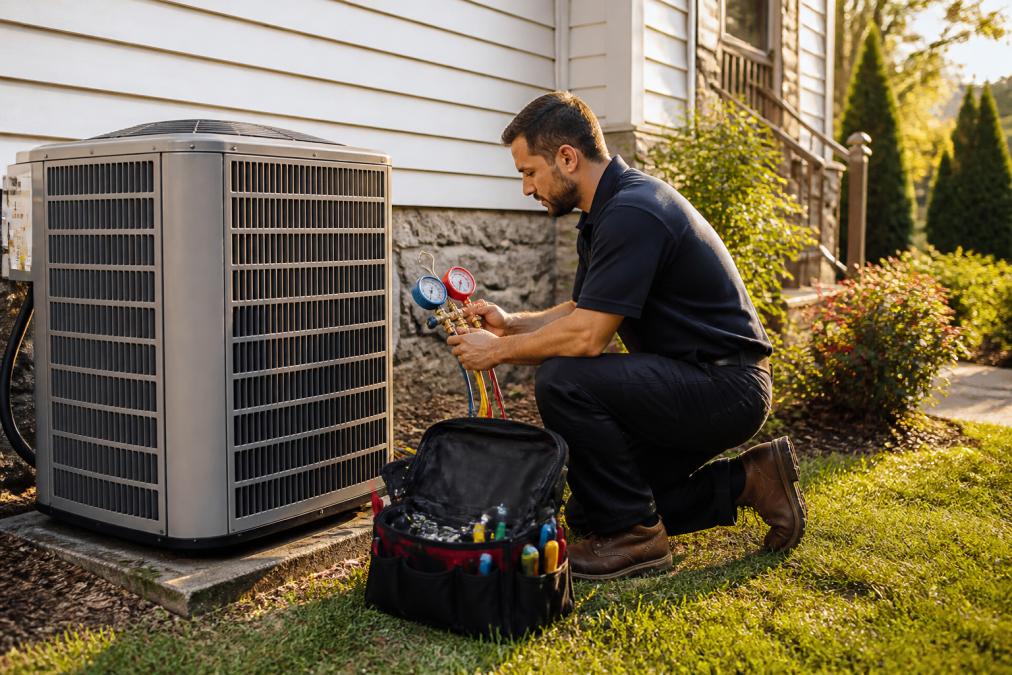
Same-Day and After-Hours Response
Emergency calls get triaged by urgency, not by who called first. A home with infants, elderly residents, or someone with a medical condition moves to the front of the queue.
What to Have Ready Before the Technician Arrives
A few details speed up the visit considerably:
- The make, model, and approximate age of your system
- What the thermostat displays and whether it responds to changes
- Whether the outdoor unit is running, humming, or silent
- Any recent unusual noises, smells, or ice buildup
- Your preferred access point to the attic, basement, or crawlspace
Clear driveway and pet access matters more than people expect. A technician who spends fifteen minutes finding the unit is fifteen minutes not spent diagnosing your system.
HVAC Diagnostic Services: How Technicians Find the Real Problem
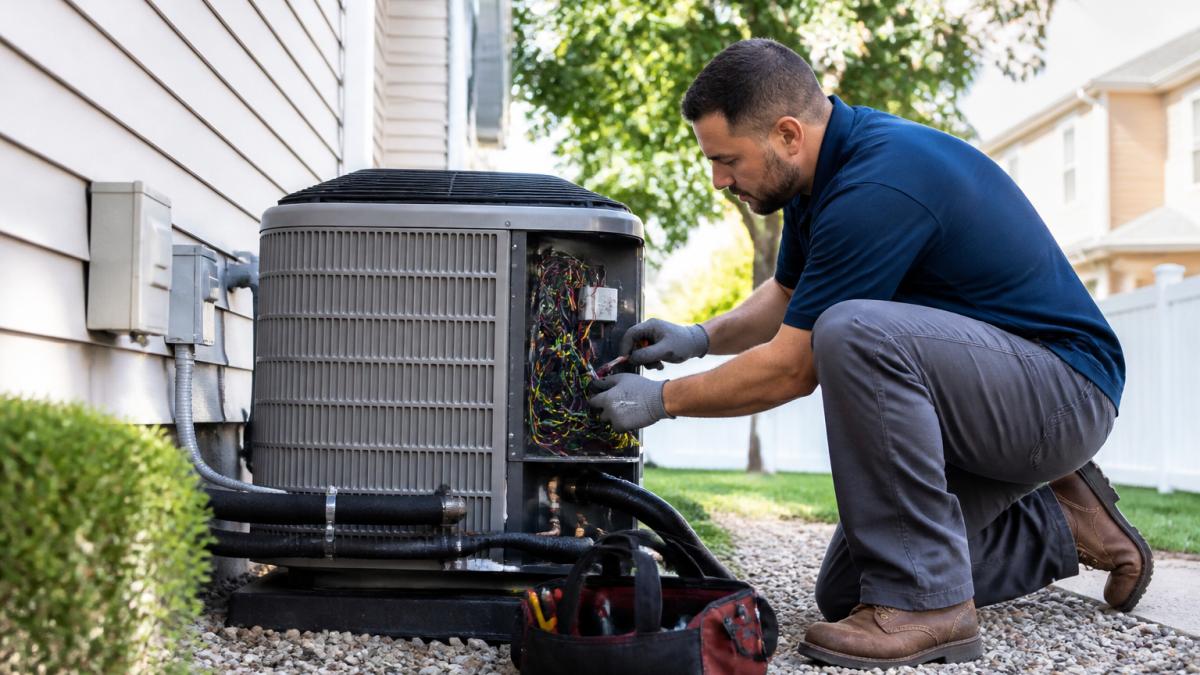
HVAC diagnostic services are the systematic testing of a system's electrical, mechanical, and refrigerant components to identify the actual cause of a failure rather than treating symptoms. A proper visit follows a sequence: thermostat verification, electrical checks at the disconnect and control board, capacitor and contactor testing, refrigerant pressure readings, and airflow measurement across the evaporator coil.
DIY Troubleshooting Checklist Before You Call for AC Repair
Before you pay for a service call, run through the checks below. Roughly a third of "broken AC" calls turn out to be something the homeowner can resolve in ten minutes.
- Thermostat: Confirm it is set to COOL, the fan is on AUTO, and the setpoint is at least 3 degrees below room temperature. Replace batteries if the display is blank or dim.
- Filter: Pull the filter and hold it up to a light. If you cannot see through it, airflow is restricted and the system may be freezing up.
- Breaker: Check both the indoor air handler breaker and the outdoor condenser breaker at your panel. A tripped breaker that resets and holds is fine; one that trips again means stop and call.
- Outdoor unit: Confirm the disconnect switch near the condenser is in the ON position. Look for ice on the refrigerant lines, which signals a flow or charge problem.
- Condensate drain: A clogged drain line triggers a float switch that shuts the system down. If you see standing water near the air handler, that is your culprit.
Thermostat, Filter, and Breaker Checks
These three items cause more no-cool calls than any mechanical failure. Start here every time.
Signs You Should Stop and Call a Professional
Stop immediately if you smell burning, hear metal-on-metal grinding from the outdoor unit, see refrigerant oil or frost at the line connections, or notice the breaker tripping repeatedly. These point to compressor, electrical, or refrigerant problems that require licensed technicians and proper equipment.
Central Air Conditioning Maintenance: Why Union County Homeowners Schedule It Twice a Year
Central air conditioning maintenance is the scheduled inspection, cleaning, and testing of a cooling system before peak season to catch worn components early. Scheduling it twice a year, spring before cooling season, fall before heating season, keeps both halves of a split system in working order.
The Cost-Benefit Math Most Guides Skip
A tune-up is a cost-avoidance tool, and the math is straightforward.
What a tune-up catches early:
- A weak capacitor that is still letting the system start but drawing higher amps
- A condenser coil packed with pollen, grass clippings, and cottonwood seed
- Refrigerant charge that has drifted low from a slow leak
- A contactor with pitted points that will eventually weld shut
- A blower motor pulling more current than its rating
- A condensate drain that is one season away from clogging and tripping the float switch
Why Twice a Year, Not Once
A split system has two halves and two seasons. The spring visit covers the cooling side: condenser coil cleaning, refrigerant charge verification, capacitor and contactor testing, condensate drain clearing, and airflow measurement. The fall visit covers the heating side: heat exchanger inspection, ignition system check, blower and inducer testing, and safety controls.
Why the Local Climate Raises the Stakes
Summers here combine high humidity with sustained heat, which is harder on cooling equipment than dry heat alone. A system removing moisture runs longer cycles than one cooling dry air to the same temperature, meaning more hours on the compressor each season, and more chances for a small problem to become a large one.
When to Replace an HVAC System Instead of Repairing It
The decision to replace rather than repair comes down to three factors: age, repair frequency, and the ratio of repair cost to replacement cost. Most central air conditioners last roughly 10 to 15 years, and once a system passes that range, repairs start compounding.
- Is the failed part the compressor, the condenser coil, or the evaporator coil? These are the three components that carry most of the system's value. A failure in any of them on a system past year 10 usually tips the math toward replacement.
- How many repairs has this system needed in the last three years? One repair is normal wear. Two is a pattern. Three means you are funding a system that is already telling you it is done.
- What is the efficiency gap? A system installed before the mid-2000s may carry a seasonal energy efficiency ratio (SEER) in the 10 to 12 range. Current federal minimums for new split systems are 14.3 SEER2 in the northern region, and high-efficiency equipment reaches into the 18 to 20+ SEER2 range. That gap shows up every month on the utility bill, not just at the register.
The Repair-or-Replace Decision in Practice
Consider replacement when:
- The system is 12 years or older and needs a major component (compressor, coil, or blower motor)
- You have paid for two or more significant repairs in the past three years
- The repair cost approaches half the cost of a new system
- Refrigerant is no longer available for your system type, R-22 in particular has been phased out of new production under the Montreal Protocol and its U.S. implementing rules, so remaining supply is reclaimed and priced accordingly
- Rooms never cool evenly despite the system running constantly
- The system uses a single-speed compressor and you plan to stay in the home more than five years
Repair still makes sense for a younger system with a single failed part. A ten-year-old unit with a bad capacitor is a repair. The same unit with a failed compressor is a conversation about replacement.
What Replacement Actually Involves
A full changeout is not just a new condenser. A proper job includes:
- New outdoor condenser and indoor evaporator coil (matched to each other, not mixed)
- Line set evaluation, older lines may need flushing or replacement if the system is switching refrigerant types
- Electrical disconnect and whip inspection
- Thermostat compatibility check, especially if you are moving to a communicating or variable-speed system
- Condensate management review, including the drain pan and float switch
- Permit and inspection, which most municipalities require for a system changeout
ENERGY STAR guidance on choosing high-efficiency cooling equipment
What Affects the Cost of AC Repair and Replacement
Pricing depends on the diagnosis, the parts required, and the access conditions at your property. No honest provider quotes a repair over the phone before seeing the system.
What actually moves the number:
| Factor | Why It Matters |
|---|---|
| Failed component | Capacitors and contactors cost far less than compressors |
| Refrigerant type | Older refrigerants are more expensive and harder to source |
| System age and condition | Older equipment can complicate part matching |
| Access and location | Rooftop, crawlspace, or tight attic access adds labor |
| Electrical condition | Undersized wiring or a failing disconnect needs correction |
| Replacement scope | A full changeout includes equipment, line set, and labor |
Why Local Climate and Coverage Matter for Union County Homes
Union County summers combine high humidity with sustained heat, harder on cooling equipment than dry heat alone. Systems here run long cycles to remove moisture, meaning more hours on the compressor each season than in a drier climate.
U.S. Environmental Protection Agency information on refrigerant handling requirements
Frequently Asked Questions
How fast can someone get to my house for emergency AC repair in Union County at 2 AM?
Response times depend on call volume, weather, and your exact location within Union County. Tornado HVAC runs 24/7 emergency service across Union, Essex, Bergen, Morris, and Passaic counties, and dispatchers will give you an estimated arrival window when you call. Have your address, system make and model, and a brief description of the symptoms ready so the technician can arrive prepared with common parts.
What are the common signs that my AC needs professional repair?
Watch for warm air from the vents, weak airflow, frequent breaker trips, unusual grinding or squealing sounds, water pooling near the indoor unit, and a system that runs constantly without cooling the house. Ice on the refrigerant lines or the outdoor unit also points to a problem. If you notice any of these, turn the system off and schedule a diagnostic visit rather than letting it run and risk compressor damage.
Should I replace a 20-year-old AC unit or keep repairing it?
Age alone is not the deciding factor. A 20-year-old system that needs a minor repair and still cools evenly may be worth keeping. But if repairs are stacking up, the unit uses outdated refrigerant, or you are facing a compressor or evaporator coil replacement, a new system usually makes more sense. An HVAC technician can measure cooling capacity and give you a written recommendation.
How often should I schedule professional AC maintenance in Union County?
Twice a year is the standard recommendation: once in spring before cooling season and once in fall before heating season. Union County summers are humid, and that moisture stresses the evaporator coil, drain line, and refrigerant circuit. A spring tune-up covers filter replacement, coil cleaning, refrigerant level checks, and thermostat calibration. Skipping maintenance is one of the most common reasons systems fail in July.
When the AC fails, the difference between a stressful week and a same-day fix comes down to who you call. Tornado HVAC offers 24/7 emergency service, professional diagnostics, and written recommendations before any work starts, backed by a team that has handled cooling emergencies across Union County for years. Schedule service with Tornado HVAC and get your home comfortable again.