 ultimate-guide
Heat Pump Installation Essex County NJ: 2026 Homeowner Guide
Table of Contents
- Heat Pump Installation in Essex County NJ: What Homeowners Need to Know
- How Heat Pump Efficiency Ratings Decide Your Long-Term Costs
- Heat Pump vs Furnace for Local Winters
- HVAC System Replacement Timeline: When to Repair and When to Replace
- Incentives, Rebates, and Tax Credits for Heat Pump Installation
- Choosing a Local HVAC Contractor for Your Installation
- Frequently Asked Questions
Last Updated: September 28, 2026
Heat Pump Installation in Essex County NJ: What Homeowners Need to Know
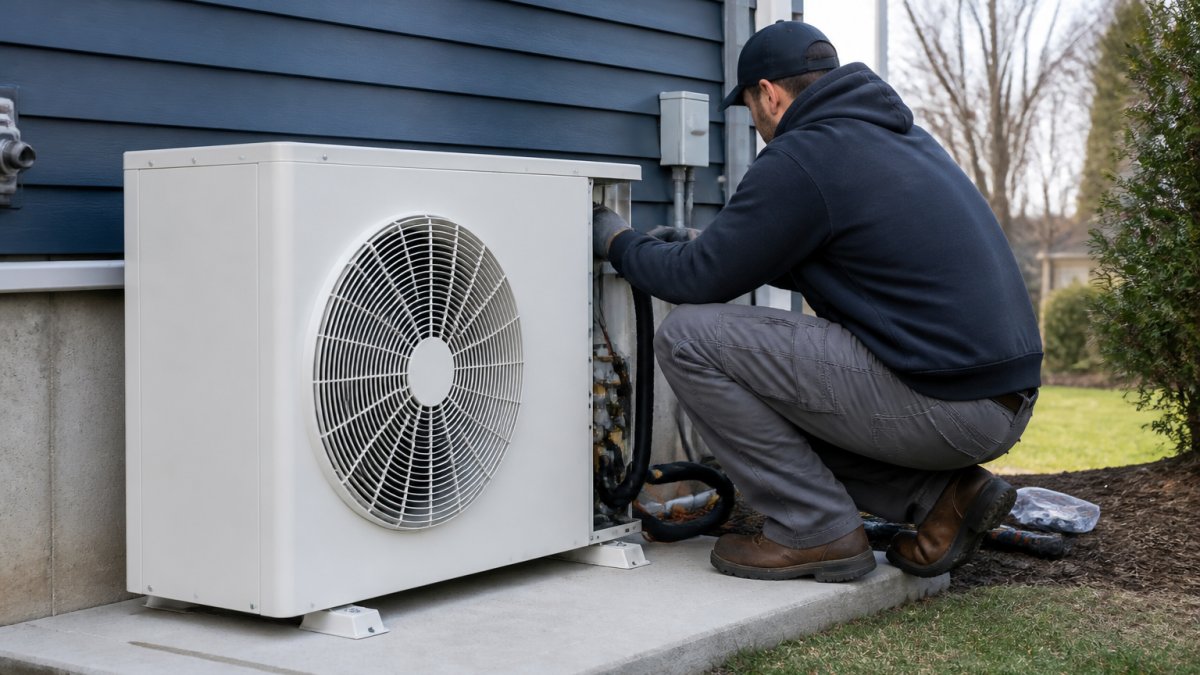
Heat pump installation in Essex County NJ replaces or supplements a home's heating and cooling system with an electric unit that moves heat rather than generating it. The equipment is only half the job; the other half is matching capacity, ductwork, and electrical service to a house built decades before electrification.
Ducted vs Ductless: Which Fits Your Home
Ducted systems distribute conditioned air through the existing duct network. Ductless systems (mini-splits) mount a wall or ceiling air handler in each zone, connected to the outdoor unit by a small refrigerant line.
- Existing ductwork in good condition: A ducted heat pump is usually the cleaner swap, and it keeps one thermostat for the whole house.
- No ducts, or ducts that can't be extended: A mini-split system is the practical answer, especially in older homes with radiator heat and no plenum space.
- Finished basements or additions with no duct access: A ductless head solves a problem ductwork can't reach without major demolition.
How Heat Pump Efficiency Ratings Decide Your Long-Term Costs
Higher SEER2 and HSPF2 ratings lower operating cost, but the gap between tiers is smaller than marketing suggests. The rating measures efficiency at a standardized test condition, not how well the system was sized, installed, or commissioned, which in a climate with real winters decides whether the rating ever shows up on your bill.
SEER2, HSPF2, and What They Mean for Your Bills
SEER2 measures cooling efficiency over a season; HSPF2 measures heating efficiency and matters most here. Both replaced older SEER and HSPF metrics under updated federal testing, so a SEER2 rating isn't directly comparable to the SEER number on a decade-old system.
A few practical points:
- A higher HSPF2 generally means better cold-weather output per kilowatt-hour.
- The rating is measured at a standardized test condition, not at 15°F.
- Oversizing a high-efficiency unit can erase most of its advantage.
Cold-Climate Performance: What the Ratings Don't Tell You
The rating on the box is measured at a mild outdoor temperature; what matters is capacity and efficiency at January temperatures.
Cold-climate heat pumps address this with two mechanisms:
- Variable-speed (inverter) compressors that ramp up and down instead of cycling on and off, which lets the system hold capacity as outdoor temperature falls.
- Vapor injection (also called enhanced vapor injection), which injects refrigerant vapor back into the compression cycle to boost heating output in low ambient conditions.
A Homeowner Maintenance Checklist Between Service Visits
Efficiency ratings decay with neglect. These tasks keep a heat pump performing between professional visits:
- Replace or clean the air filter on schedule. A clogged filter chokes airflow, drives up static pressure, and forces the system to work harder, the single highest-impact task you can do.
- Keep the outdoor unit clear. Leaves, snow, and debris restrict airflow and reduce capacity. Clear a few feet in every direction and keep snow off the cabinet.
- Check the condensate drain. In heating mode, the outdoor unit defrosts and produces water. A blocked drain line can cause nuisance shutdowns.
- Leave the thermostat alone. Heat pumps run long, low cycles; big setbacks and rapid recovery force the backup heat on more often, which is less efficient.
- Listen and look. Unusual noises, ice that doesn't clear after a defrost cycle, or a unit that runs constantly are signals to call for service, not to wait.
Heat Pump vs Furnace for Local Winters
A modern cold-climate heat pump holds its own against a gas furnace through most of a northern New Jersey winter. The caveat is deep cold: output and efficiency decline as temperatures drop, which is why cold-climate models and a backup heat source matter here.
| Approach | Strength | Trade-off |
|---|---|---|
| Cold-climate heat pump alone | Lowest emissions, one system | Needs correct sizing for deep cold |
| Dual-fuel (heat pump + furnace) | Best cost balance in mixed climates | Two systems to maintain |
| Gas furnace only | Proven cold-weather output | No cooling, higher fossil use |
HVAC System Replacement Timeline: When to Repair and When to Replace
Repair makes sense when the failure is isolated and the system is young. Replacement makes sense when repairs stack up, efficiency has fallen off, or the compressor and air handler are both near end of life.
Use this as a working rule set:
- Under 10 years old, single failure: Repair. A blower motor or capacitor is not a reason to replace a system with years left.
- 10-15 years old, first major repair: Get both numbers. Compare the repair against the remaining service life.
- 15+ years old, repeated repairs: Replacement usually wins, especially if you're facing refrigerant or compressor work.
- Any age, failed compressor plus failed air handler: Replace. You're rebuilding the system piece by piece at that point.
Incentives, Rebates, and Tax Credits for Heat Pump Installation
Most local pages mention "rebates available" and stop. Here's the actual structure of the money, who administers it, and how the application process works.
The Three Buckets of Heat Pump Money
There are three separate programs a qualifying installation can touch, and they stack:
- Federal tax credit (25C). A nonrefundable credit equal to 30% of the installed cost of qualifying heat pump equipment, capped at $2,000 per year for heat pumps (Energy Efficient Home Improvement Credit). It's claimed on your federal return using Form 5695, not at the point of sale. The equipment has to meet the efficiency threshold published by the IRS and ENERGY STAR, which for cold-climate air-source heat pumps means meeting the applicable HSPF2 and SEER2 minimums for your region.
- NJ Clean Energy Program residential incentives. Administered through the state's Clean Energy Program, this is the bucket most homeowners don't know how to actually access. Incentive amounts are set per project and change with program updates, so the number you see on a contractor's flyer may be stale.
- Utility-specific and manufacturer rebates. Your electric utility may run its own heat pump incentive on top of the state program, and manufacturers periodically run seasonal promotions. These are the most volatile and the most likely to expire mid-project.
How to Actually Apply for the NJ Clean Energy Program Incentive
The state program is a workflow, not a coupon you hand the contractor, and skipping a step can disqualify the job.
- Confirm the equipment qualifies before installation. The program publishes eligible model lists. Ask your contractor for the exact model number of the indoor and outdoor unit and check it against the current list. A unit that misses the threshold by a fraction of a rating point is ineligible, full stop.
- Use a participating contractor. The state program maintains a list of contractors who are registered to submit incentive paperwork. If your installer isn't on it, you may be doing the submission yourself, and the program may not accept a self-installed or non-participating job at all.
- Get the work permitted and inspected. Local permits and a passing inspection are typically part of the documentation package. This is also why pulling a permit matters beyond code compliance, it's evidence the job was done to standard.
- Keep every document. Invoices, model and serial numbers, the load calculation, the permit number, and proof of payment. The program and the IRS both want a paper trail, and reconstructing it after the fact is painful.
- Submit within the program window. Incentive programs have application deadlines and funding caps. A program can be fully subscribed before its published end date, so earlier is safer.
What Trips People Up
- The contractor's estimate is not the incentive amount. Treat any rebate figure on a proposal as an estimate until you've confirmed it against the current program terms.
- The federal credit is nonrefundable. It reduces tax owed; it doesn't send you a check if you owe nothing. Plan accordingly.
- Stacking rules vary. Some utility rebates can be combined with the state program and the federal credit; others can't. Read the terms for each.
- Efficiency thresholds are not the same across programs. A unit that qualifies for the federal credit may not qualify for the state incentive, or vice versa.
Because program rules, eligible amounts, and deadlines change, we don't quote dollar figures here. Check the current terms directly with the NJ Clean Energy Program residential incentives and the federal ENERGY STAR tax credit guidance before you budget. A contractor who files these regularly can tell you which programs are active, but the official source is what governs.
Choosing a Local HVAC Contractor for Your Installation
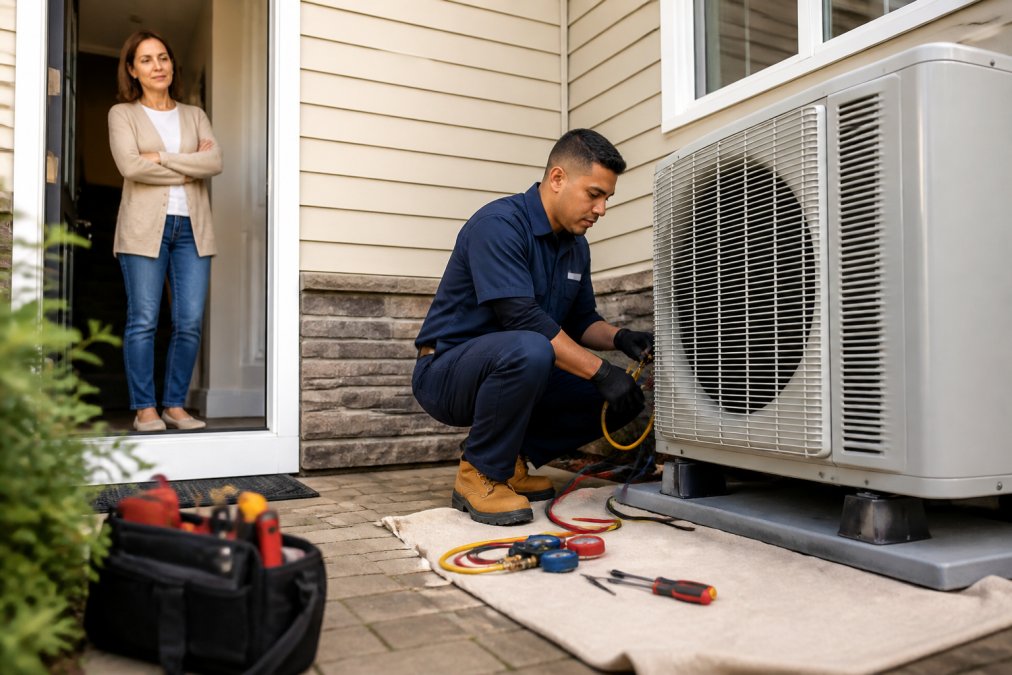
The installation crew matters more than the badge on the outdoor unit. Two identical heat pumps installed by different teams perform very differently, because commissioning, charge adjustment, and airflow setup are where quality shows.
When you're evaluating contractors, ask:
- Will you perform a room-by-room load calculation, and will I get a copy?
- What's the written scope, including any ductwork or electrical changes?
- Who pulls the permit, and does the work get inspected?
- What does the labor warranty cover, and for how long?
Frequently Asked Questions
Do heat pumps work well in New Jersey winters?
Yes. Modern cold-climate heat pumps are built to heat efficiently in temperatures well below freezing, and they are increasingly common across Essex County. Performance depends on the model's HSPF2 rating and proper sizing for your home. During the coldest stretches, a heat pump may run longer cycles or pair with a backup heat source. A load calculation and a written recommendation from a licensed HVAC contractor will tell you exactly how a specific unit should perform in your house.
How long does a professional heat pump installation take?
Most residential heat pump installations take one to three days, depending on whether ductwork already exists and whether you are converting from a furnace, boiler, or older central air system. Ductless mini-split installations can sometimes finish in a single day. Projects that require new refrigerant lines, electrical upgrades, or permit inspections add time. Your contractor should give you a written schedule before work begins so you know what to expect.
Are there federal tax credits or utility rebates available for heat pump installation?
Yes. Federal tax credits for qualifying high-efficiency heat pumps are available through the Inflation Reduction Act, and the NJ Clean Energy Program offers additional residential incentives that change periodically. Utility rebates may stack on top. Because program rules and eligible equipment lists update often, ask your HVAC contractor for current paperwork and confirm details directly with the program before you buy. Keep all invoices and model numbers; you will need them to claim.
How do I know if I need a repair or a full system replacement?
The HVAC system replacement timeline usually hinges on age, repair frequency, and efficiency. Systems over 12 to 15 years old, units needing repeated repairs, or equipment using older R-22 refrigerant are often better replaced than repaired. Rising energy bills and uneven room temperatures are other signals. A professional diagnosis will tell you whether a targeted repair makes sense or whether replacement is the smarter long-term investment for your home.
Replacing a heating system in a house you plan to keep is a long-horizon decision, and the wrong install is expensive to undo. Tornado HVAC provides professional diagnostics, written recommendations, and heat-pump and central-air installation with 24/7 emergency service across North Jersey. Schedule service with Tornado HVAC to get a load calculation, a clear scope, and a system sized for your home rather than a rule of thumb.