 ultimate-guide
Average Cost to Replace Home HVAC System
Table of Contents
- What Homeowners Pay for HVAC Replacement
- HVAC Replacement Cost Factors That Drive Your Final Price
- Signs You Need a New HVAC System
- How Long Does HVAC Installation Take
- HVAC System SEER2 Ratings Explained
- Breaking Down Installation Labor and Additional Fees
- Financing and Rebate Programs for New HVAC Systems
- Maintenance Lifecycle Costs Beyond Installation
- Frequently Asked Questions
Last Updated: September 27, 2026
What Homeowners Pay for HVAC Replacement
The average cost to replace home HVAC system varies widely depending on your home's size, the equipment you choose, and your location. Understanding the range helps you budget realistically.
A complete HVAC replacement involves your furnace, air handler, refrigerant lines, thermostat, and sometimes ductwork. At Tornado HVAC, we help homeowners throughout Bergen, Essex, Morris, Passaic, and Union counties plan replacements that match their needs and budgets.
Cost reflects installation complexity. A straightforward replacement with existing ductwork costs less than one requiring new ductwork or significant modifications. Labor, equipment quality, and local factors all affect the final price.
HVAC Replacement Cost Factors That Drive Your Final Price
System Type and Capacity
Your system type, split system, furnace with central air, or heat pump, directly affects cost. Split systems (outdoor condenser with indoor air handler) are common and flexible. Furnace-based systems use existing ductwork if available. Heat pumps handle both heating and cooling but require careful sizing to your home's needs.
System capacity must match your home's requirements. Undersized systems won't adequately heat or cool; oversized systems waste energy and shorten equipment life. A professional assessment determines the right capacity for your square footage and climate zone.
Home Size and Ductwork Requirements
Home size is a straightforward cost driver. Larger homes need higher-capacity systems and more refrigerant lines. Damaged, poorly sealed, or absent ductwork increases project cost substantially, as linear foot pricing for new ductwork adds up quickly.
Homes with existing ductwork in good condition have lower installation costs. Those without ductwork or requiring relocation face significant additional expense. Crawlspace, attic, or basement accessibility also affects labor time and complexity.
Energy Efficiency Ratings
Modern HVAC systems are rated by efficiency standards that influence equipment cost. SEER2 (Seasonal Energy Efficiency Ratio 2) measures cooling efficiency; AFUE (Annual Fuel Use Efficiency) applies to furnaces. Higher ratings mean better energy consumption and lower utility bills, but cost more upfront.
High-efficiency systems cost more initially but deliver long-term savings through reduced energy consumption. Many homeowners find the payback period is shorter than expected, especially in climates with extreme heating or cooling seasons.
Signs You Need a New HVAC System
Your system needs replacement when it shows warning signs. Age is the first indicator: most HVAC systems last 15-20 years. If your system is approaching or past this age, replacement becomes more economical than continued repairs.
Frequent breakdowns signal declining reliability. Multiple service calls per year mean repair costs accumulate quickly. Rising energy bills despite consistent usage point to declining efficiency. A technician can assess whether repair or replacement makes sense.
Uneven heating or cooling, strange noises, or refrigerant leaks are additional red flags. A professional diagnostic evaluation clarifies whether repair or replacement makes sense.
How Long Does HVAC Installation Take
A typical HVAC replacement takes one to three days, depending on system complexity and existing infrastructure. Straightforward replacements with accessible ductwork may finish in one day. Complex projects requiring new ductwork, refrigerant line routing, or electrical upgrades extend the timeline to two or three days.
Day one involves removing the old system and beginning new equipment installation. Day two focuses on connections, refrigerant lines, and thermostat integration. Final inspection and startup occur on the last day or shortly after.
Weather and accessibility issues can affect the timeline.
HVAC System SEER2 Ratings Explained
The SEER2 rating measures air conditioning cooling efficiency over a typical season. Higher ratings mean better efficiency and lower cooling costs. Modern systems range from SEER2 13 (minimum federal standard) to SEER2 24 or higher for premium models.
Breaking Down Installation Labor and Additional Fees
Labor and Installation Costs
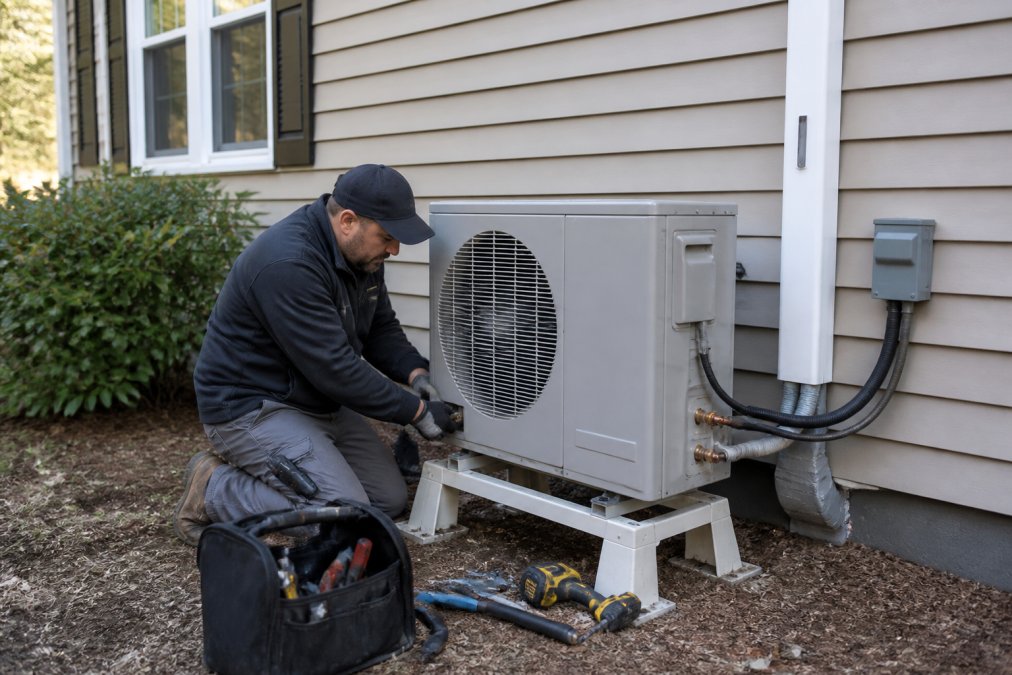
Labor typically represents 40-60% of total HVAC replacement cost. Installation complexity, home accessibility, and local market rates influence labor pricing. Straightforward replacements with existing ductwork cost less than projects requiring extensive modifications, new refrigerant line routing, or electrical upgrades.
Permit and Inspection Fees
Local building codes require permits for HVAC system replacements. Permit fees vary by municipality and system type. Inspections ensure your new system meets safety and efficiency standards. Your contractor typically handles permit applications and scheduling inspections, though you remain responsible for the fees.
Thermostat Upgrades and Accessories
Your existing thermostat may not be compatible with your new HVAC system. Basic manual thermostats offer limited control. Programmable thermostats set different temperatures for different times of day. Smart thermostats integrate with Wi-Fi for remote control and energy usage data.
Financing and Rebate Programs for New HVAC Systems
Many homeowners finance HVAC replacements through loans, credit cards, or manufacturer financing programs. Understanding your financing options and available incentives can reduce your net cost significantly and make a high-efficiency system more affordable.
Federal Tax Credits and the Inflation Reduction Act
The Inflation Reduction Act, enacted in 2022, expanded federal tax credits for qualifying HVAC equipment (Home energy tax credits). Homeowners who install eligible heat pumps, furnaces, or air conditioning systems may claim a tax credit on their federal income tax return. The credit structure rewards higher-efficiency equipment: a standard-efficiency system may qualify for a smaller credit, while a high-efficiency heat pump or furnace can qualify for a larger one.
Utility Company Rebates
Many utility companies offer rebates for installing high-efficiency HVAC systems as part of energy conservation programs. These rebates are often available directly at the point of purchase, meaning you can deduct them from your contractor's invoice rather than waiting to claim them on your taxes. Rebate amounts vary widely by utility company and region, ranging from $200 to $1,500 or more depending on the system's efficiency rating and your area's program funding.
Manufacturer and Contractor Financing
Many HVAC equipment manufacturers and contractors offer promotional financing, such as 0% APR for 12-60 months on approved credit. These programs make it easier to spread the cost over time without paying interest, provided you pay off the balance within the promotional period. Read the terms carefully: if you don't pay in full by the end of the promotional period, you may owe retroactive interest at a higher rate.
Calculating Net Cost After Incentives
When evaluating HVAC systems, calculate your net cost by subtracting available rebates and tax credits from the total installation price. For example, if a high-efficiency heat pump system costs $8,000 installed, and you qualify for a $2,000 utility rebate and a $3,500 federal tax credit, your net cost is $2,500 before financing. This calculation often shows that a higher-efficiency system costs less net of incentives than a lower-efficiency alternative, making it the better long-term investment.
Maintenance Lifecycle Costs Beyond Installation
Your HVAC system's operating costs extend well beyond the initial replacement. Regular maintenance, typically twice yearly, before heating and cooling seasons, keeps your system running efficiently and extends its lifespan. Many homeowners find that a maintenance plan with their contractor provides peace of mind and prevents emergency service calls. Tornado HVAC offers peace of mind through membership plans.
Frequently Asked Questions
What is the $5,000 HVAC rule?
The $5,000 rule is a guideline suggesting that if your HVAC system is over 10 years old and repair costs exceed $5,000, replacement often makes more financial sense than continued repairs. However, this threshold varies based on your system's age, efficiency, and remaining lifespan. A professional diagnostic from an HVAC contractor can help determine whether repair or replacement is the better investment for your specific situation.
Should I replace a 20-year-old HVAC system?
Yes, most HVAC systems reach the end of their serviceable life around 15-20 years. A 20-year-old system typically operates at reduced efficiency, requires more frequent repairs, and uses older refrigerant standards. Replacing an aging system with a modern, high-efficiency unit reduces energy consumption, improves comfort, and eliminates the risk of unexpected breakdowns during peak heating or cooling season.
How much is a new HVAC system for a 2,000 square foot house?
HVAC replacement costs for a 2,000 square foot home depend on system type, efficiency rating, existing ductwork condition, and local labor rates. Rather than estimating a specific figure, contact a local HVAC contractor for a professional quote. They will assess your home's heating and cooling needs, measure square footage, evaluate ductwork, and provide a detailed breakdown of equipment and installation costs.
What time of year is cheapest to replace HVAC?
Spring and fall typically offer lower demand for HVAC replacement, potentially providing more flexible scheduling and contractor availability. Winter and summer are peak seasons when emergency repairs and replacements are highest, which may reduce scheduling flexibility. However, replacing your system before the heating or cooling season begins ensures comfort when you need it most. Schedule based on your system's condition and your comfort needs rather than waiting for an off-season discount.
Does the size of my home affect HVAC replacement costs?
Yes, home size significantly impacts HVAC replacement costs. Larger homes require higher-capacity systems with greater tonnage ratings, more refrigerant lines, and potentially more extensive ductwork. Square footage determines the system capacity needed to maintain consistent temperature and airflow throughout your home. A professional assessment of your home's size, insulation, and layout ensures you get the right-sized system for efficient operation.
What factors influence the final price of a new HVAC installation?
HVAC installation costs are driven by system type (furnace, heat pump, central air), efficiency rating (SEER2 for cooling, AFUE for heating), home square footage, ductwork condition and replacement needs, labor complexity, permits and inspections, thermostat upgrades, and regional contractor rates. Each factor contributes to the total project cost. A detailed quote from a licensed HVAC contractor will itemize these factors so you understand where your investment goes.