 ultimate-guide
Boiler Repair Bergen County NJ: 2026 Homeowner Guide
Table of Contents
- Signs of Boiler Failure Bergen County Homeowners Should Never Ignore
- DIY Troubleshooting Checklist Before You Call for Boiler Repair
- Boiler Maintenance Tips That Prevent Costly Breakdowns
- When to Call for Emergency Boiler Service
- Boiler Replacement vs Repair: How to Decide
- Boiler Repair Costs in Bergen County: What Actually Drives the Estimate
- How to Schedule Boiler Repair in Bergen County NJ
- Frequently Asked Questions
Last Updated: September 17, 2026
Signs of Boiler Failure Bergen County Homeowners Should Never Ignore
Boiler repair in Bergen County NJ starts with recognizing the warning signs before a small issue becomes a mid-winter emergency.
Here's what to listen and look for:
- Banging, clanking, or whistling noises. Sediment buildup or a failing circulator pump often causes this. Boiler noise is one of the earliest warning signs of trouble.
- Water pooling around the base. Boiler leaks typically trace back to a worn gasket, a corroded tank, or a failing pressure relief valve.
- Pressure gauge reading too high or too low. Normal residential boilers run between 12 and 30 psi. Outside that range, something is wrong.
- Radiators that stay cold. Uneven heat points to air trapped in the system, a stuck zone valve, or a circulator that's on its way out.
- A pilot light that keeps going out. This can signal a thermocouple failure or a gas supply issue that needs professional attention.
DIY Troubleshooting Checklist Before You Call for Boiler Repair
A few simple checks can solve the problem or give your technician a head start.
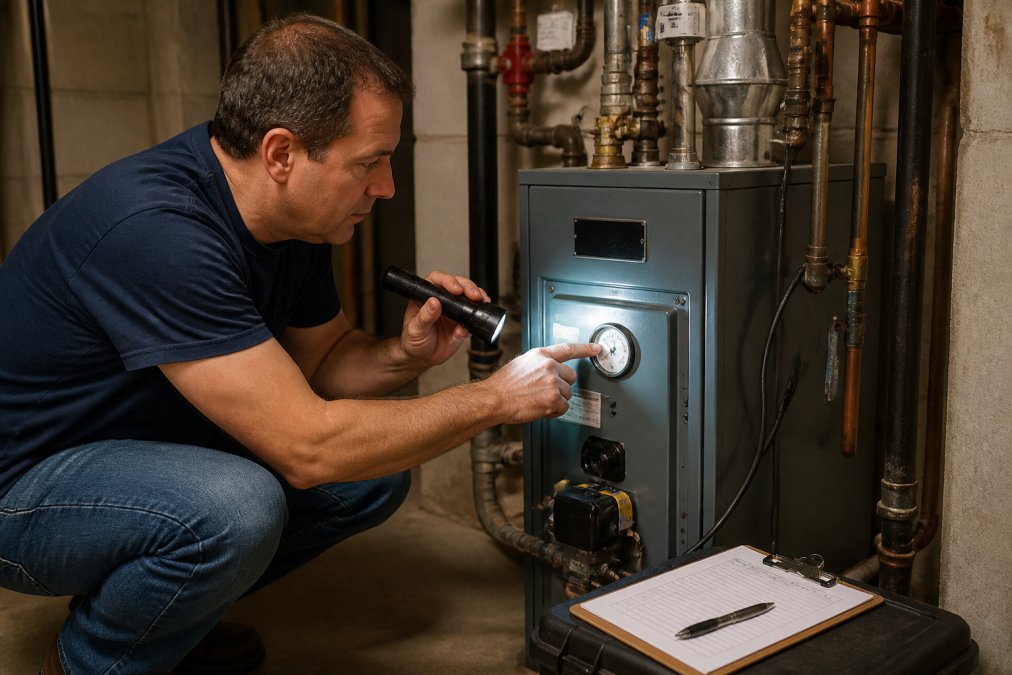
What you can check safely:
- Confirm the thermostat is set to "heat" and the temperature is above the current room reading
- Check that the boiler's power switch and circuit breaker are both on
- Verify the gas valve is open if you have a gas-fired boiler
- Look at the pressure gauge and note the reading
- Check for visible water around the base or on nearby pipes
- Confirm the pilot light is lit, if your model has one
What to leave to a licensed technician:
- Anything involving the gas line, burner assembly, or heat exchanger
- Pressure relief valve testing or replacement
- Electrical diagnostics on the control board or circulator
- Any repair that requires opening the boiler casing
Boiler Maintenance Tips That Prevent Costly Breakdowns
Annual boiler maintenance is the most effective way to avoid a no-heat emergency in January. Whether a boiler lasts 15 years or quits at 10 usually comes down to whether that service happened.
A Season-by-Season Maintenance Calendar
Most homeowners think about their boiler twice a year: once when it fails and once when the first cold snap hits. Spreading a few small tasks across the calendar keeps it in better shape.
- Early fall (before the first cold snap). Bleed radiators and baseboards, test the thermostat in both heat and cool modes, clear the area around the boiler, and schedule the professional tune-up before appointment calendars fill up.
- Mid-winter. Watch the pressure gauge weekly. A reading that drifts upward usually points to a failing expansion tank or a fill valve that isn't seating. Note any new noises, even faint ones.
- Spring (after heating season ends). Look for weeping around fittings and the relief valve discharge pipe. Small leaks that dry up in summer still corrode metal all year.
- Summer. Replace thermostat batteries, dust the boiler's exterior vents, and confirm the flue termination outside is clear of nests or debris.
What the Annual Tune-Up Actually Catches
A tune-up is a diagnostic pass over the components most likely to fail under load:
- Heat exchanger cracks. Hairline cracks can leak carbon monoxide into the living space before any visible failure, the single most important reason to keep up with annual service.
- Pressure relief valve function. The valve is tested by lifting the lever and confirming it reseats. A valve that sticks open or won't open at all is a safety issue, not a nuisance.
- Expansion tank charge. A waterlogged tank causes pressure spikes every time the boiler fires. Checking the air charge takes minutes and prevents a common mid-winter failure.
- Combustion analysis. A technician measures oxygen and carbon monoxide levels in the flue gas. Readings outside the manufacturer's range usually mean a dirty burner, a blocked flue, or a fuel-air mixture that needs adjustment.
- Circulator and zone valve operation. These fail silently. A circulator drawing higher-than-spec amperage is on its way out, even if it's still moving water.
Carbon Monoxide: The Safety Piece Most Guides Skip
Any fuel-burning boiler produces carbon monoxide, and the flue is supposed to carry it outside. When the heat exchanger cracks, the flue blocks, or the draft reverses, that gas can end up in your basement.
A few habits matter here:
- Install UL-listed carbon monoxide alarms on every level and outside sleeping areas. Replace them per the manufacturer's schedule, not just when they chirp.
- Never block, tape, or cover the boiler's combustion air openings. A boiler needs air to burn safely, and a sealed utility closet can starve it.
- If a CO alarm sounds, leave the house and call 911 or your gas utility from outside. Don't open windows and go back to bed.
- Have the flue inspected during the annual tune-up. A bird's nest, collapsed liner, or disconnected joint can send exhaust the wrong direction.
Between Visits: Habits That Extend Boiler Life
- Keep the area around the boiler clear of storage, paint cans, and anything flammable
- Bleed radiators at the start of each heating season, and again if you notice cold spots at the top of a radiator
- Watch the pressure gauge monthly and note any drift in a notebook or phone note
- Replace thermostat batteries annually, even if the display still looks fine
- Don't ignore small leaks, new noises, or a pilot that needs relighting more than once a season
Preventative maintenance also protects your warranty: most manufacturers require documented annual service, and skipping it can void coverage. Keep the records.
When to Call for Emergency Boiler Service
Emergency boiler service is warranted when your home loses heat in dropping temperatures, when you smell gas, or when water is actively leaking near electrical components.
Call immediately if you notice:
- A gas smell. Leave the house and call your gas utility from outside before calling anyone else.
- No heat when outdoor temperatures are below freezing. Pipe freeze risk climbs fast.
- Water pouring from the boiler or nearby piping.
- The boiler repeatedly locks out or won't stay lit.
- Scorching or burning smells near the unit.
Boiler Replacement vs Repair: How to Decide
The repair-or-replace decision usually comes down to three factors: the boiler's age, the cost of the repair relative to replacement, and how efficiently the system runs.
| Factor | Lean Toward Repair | Lean Toward Replacement |
|---|---|---|
| Age of boiler | Under 12 years | 15+ years |
| Repair cost vs. new unit | Repair is a small fraction of replacement | Repair approaches half the cost of new |
| Frequency of breakdowns | First issue in several years | Third or fourth repair in two years |
| Efficiency | Still meeting your heating needs | Struggling to keep up, high fuel use |
| Parts availability | Parts readily available | Parts discontinued or hard to source |
Boiler Repair Costs in Bergen County: What Actually Drives the Estimate
Boiler repair pricing depends on the specific failure, the parts required, and the system's accessibility. No honest technician can quote a repair before diagnosing the problem. Understanding what drives the number lets you evaluate a quote instead of just accepting it.
The Factors That Move the Estimate
- The failed component. A thermocouple, zone valve, or expansion tank is a contained repair with a modest parts cost. A heat exchanger, control board, or circulator on a cast-iron boiler is major, often because the labor to access the part rivals the part itself.
- System type. Hydronic and radiant systems have different components than steam boilers, which use low-water cutoffs, steam traps, and site glasses. Parts availability varies by brand and vintage.
- Access and layout. A boiler tucked into a tight basement corner with pipes across the service panel takes longer to work on than one with clear access. Labor time is the largest variable in most estimates.
- Age and parts availability. Older systems can require specialty parts with longer lead times, and a discontinued brand may need a retrofit kit or universal replacement, changing both parts cost and labor.
- Whether it's an emergency call. After-hours and weekend service typically carries a different rate than a scheduled weekday visit. That premium reflects the technician's time, not a different quality of work.
- Diagnostic fee structure. Some companies credit the diagnostic fee toward the repair if you approve the work; others charge a flat diagnostic that stands alone. Ask which model applies before the visit.
How to Read a Repair Estimate
A useful estimate breaks the number into parts and labor, names the component being replaced, and states whether the repair restores full function or is a stopgap. If you get a lump sum with no breakdown, ask for one.
A few questions worth asking before you approve work:
- What's the part number, and is it OEM or aftermarket?
- Is this repair expected to last the remaining life of the boiler, or is it a temporary fix?
- If the same component fails again within the warranty window, what's covered?
- Would a different repair option (for example, replacing a section of piping rather than a single fitting) cost more now but last longer?
Repair vs. Replace: The Cost Crossover
The crossover point usually sits around half the cost of a new unit. If a repair approaches that threshold on a boiler 15 years or older, replacement usually makes more financial sense over a five-year horizon. On a unit under 10 years old, a repair that's a small fraction of replacement cost is almost always right.
The math isn't just the repair bill. Factor in:
- The efficiency gap between your current unit and a modern condensing boiler, which shows up on every heating bill
- The likelihood of a second failure in the same season
- Any manufacturer warranty remaining on the existing unit
- The cost of a second emergency visit if the repair doesn't hold
Why Written Recommendations Matter
The right approach is a professional diagnostic first. A technician identifies the actual failure and gives you a written recommendation before any work begins, so you're deciding based on a diagnosis, not a guess.
How to Schedule Boiler Repair in Bergen County NJ
Scheduling boiler repair starts with a phone call or online request, followed by a diagnostic visit and a written recommendation before work begins. Tornado HVAC serves homeowners across Bergen, Essex, Morris, Passaic, and Union counties.
Here's how the process works:
- Call or book online. Describe your symptoms: no heat, noise, leaks, pressure issues.
- Get a diagnostic visit. A licensed technician inspects the system and identifies the failure.
- Review the written recommendation. You'll see what's wrong and what the repair involves.
- Approve the work. No surprises, no work started before you agree.
- Repair and verify. The technician completes the repair and confirms the system is running correctly.
Frequently Asked Questions
What are the most common signs that a boiler needs repair?
The clearest signs of boiler failure include banging, kettling, or whistling noises, water pooling around the base of the unit, a pressure gauge that keeps dropping, radiators that stay cold on the bottom, and a boiler that shuts off before the thermostat setting is reached. Yellow flames instead of blue, a pilot light that keeps going out, or a carbon monoxide detector sounding are urgent. If you notice any of these, stop using the system and call a licensed technician for boiler repair.
Is it better to repair or replace an aging boiler?
Age, repair history, and efficiency usually decide it. A unit under 10 years old with one isolated fault is normally worth repairing. Once a boiler passes 15 years, needs a second major repair in two seasons, or drives heating bills up despite regular service, replacement often costs less over the next five years. A technician should give you a written recommendation covering both paths so you can compare them directly.
What should I check before calling for emergency boiler service?
Before you call, confirm the thermostat is set to heat and the breaker has not tripped. Check that the gas valve is open, look at the pressure gauge for a reading below the manufacturer's range, and see whether the pilot light or ignition sequence is working. If you smell gas, hear water running inside the unit, or see standing water, leave the area and call from outside. Have your boiler model and serial number ready so the dispatcher can send the right technician.
How often should a boiler be serviced to prevent breakdowns?
Annual service is the standard for residential boilers, ideally in early fall before the heating season starts. A tune-up covers thermostat calibration, a heat exchanger inspection, burner cleaning, and a pressure relief valve check. Skipping years lets small issues like a slow leak or a fouled burner build into mid-winter failures. Homes with hard water or older hydronic systems may benefit from a second visit in spring, especially if the system has needed repairs before.
A failing boiler rarely picks a convenient time to quit, and the cost of waiting usually shows up as frozen pipes or a bigger repair. Tornado HVAC handles boiler diagnostics, repairs, and replacements across North Jersey, with 24/7 emergency service, licensed technicians, and written recommendations before any work begins. Whether you need a same-day repair or you're weighing replacement, schedule service with Tornado HVAC and get your heat back on.