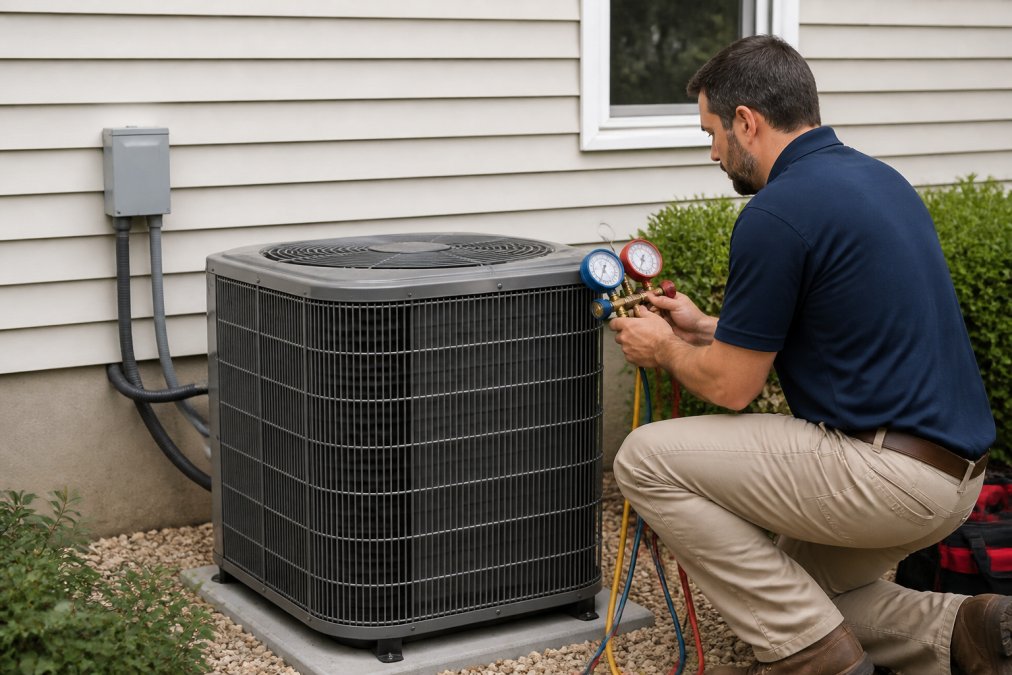
 ultimate-guide
Cost of HVAC System Replacement 2026: Pricing Guide
Table of Contents
- What Drives HVAC Replacement Cost in 2026
- Factors Affecting HVAC Installation Price
- Comparing System Types and Efficiency Ratings
- When to Replace vs Repair HVAC Equipment
- HVAC Replacement Financing Options and Rebates
- HVAC Installation Timeline: What to Expect
- How to Compare HVAC Replacement Cost Quotes
- Frequently Asked Questions
Last Updated: September 12, 2026
What Drives HVAC Replacement Cost in 2026
The cost of HVAC system replacement 2026 hinges on three variables: equipment tier, home size, and how much of the existing distribution system can be reused. A straightforward swap of a like-for-like unit lands at the low end. A full changeover that adds a heat pump, new line set, and upgraded thermostat climbs well above it. This guide from Tornado HVAC breaks down what actually moves the number, so you can read a quote with confidence.
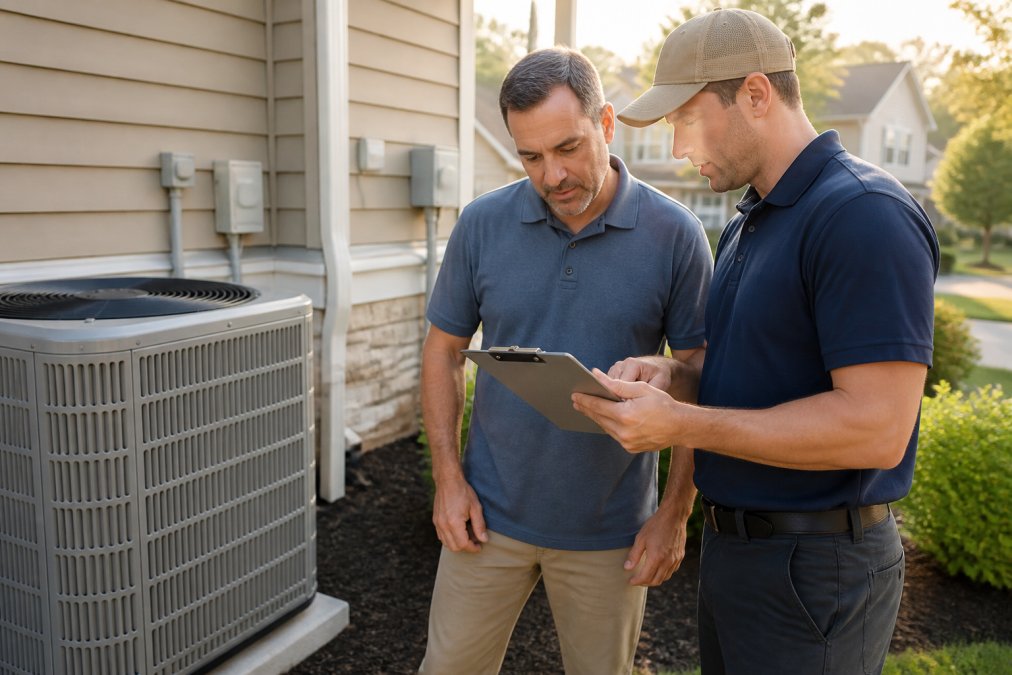
Why Two Quotes for the Same Home Rarely Match
Contractors scope differently. One prices a condenser and coil swap using existing line set and ductwork. Another prices a full system with new pad, disconnect, whip, and permit. Neither is wrong. They are answering different questions.
What most guides miss is that the cheapest quote often excludes the work that makes the install last. Ask every contractor to list what is not included.
Factors Affecting HVAC Installation Price
Factors affecting HVAC installation price fall into four buckets: equipment, labor, site conditions, and compliance. Equipment is the most visible line. The rest is where budgets drift.
Equipment, Labor, and the Hidden Line Items
- Equipment tier: Single-stage, two-stage, or variable-speed. Each step up raises the unit cost and the comfort ceiling.
- System sizing: A proper load calculation determines tonnage. Oversizing wastes energy; undersizing runs constantly.
- Labor: Line set replacement, electrical upgrades, condensate routing, and crane lifts for rooftop or tight-side-yard units.
- Compliance: Permits, inspection fees, and refrigerant handling under EPA Section 608 regulations.
- Post-installation costs: Drywall repair, thermostat programming, and balancing after startup.
Comparing System Types and Efficiency Ratings
Efficiency ratings tell you how much of every dollar of energy becomes conditioned air. SEER2 is the seasonal efficiency metric for cooling equipment, AFUE is the annual fuel use efficiency for gas furnaces, and HSPF2 measures heating efficiency for heat pumps. Higher numbers mean lower operating cost and a higher purchase price, but the rating only describes the equipment, not the installed system.
System Types at a Glance
| System Type | Efficiency Metric | Best For | Changeover Complexity |
|---|---|---|---|
| Central AC + gas furnace | SEER2 / AFUE | Existing ducted homes | Lowest, like-for-like swap |
| Heat pump (air-source) | SEER2 / HSPF2 | Mild to moderate winters, dual-fuel setups | Moderate, may need new line set and electrical |
| Dual-fuel (heat pump + furnace) | SEER2 / HSPF2 / AFUE | Cold winters with a gas backup | Moderate to high, controls integration |
| Mini-split (single or multi-zone) | SEER2 / HSPF2 | Rooms without ductwork, zoned control | High for multi-zone, line set routing and electrical |
| Boiler + AC | AFUE | Older hydronic homes | Highest, separate distribution systems |
A split system pairs an outdoor condenser unit with an indoor air handler. Ductwork condition determines how much of that rated efficiency reaches your rooms, a system rated at a high SEER2 will not deliver that number if the distribution side is leaking or undersized.
What the Ratings Actually Mean in Practice
SEER2 replaced SEER as the federal minimum-efficiency standard, and the test procedure is more representative of real-world conditions (energy.gov). That means a unit that carried a given SEER number under the old standard will generally show a lower SEER2 number for equivalent performance. When you compare a quote written in SEER against one written in SEER2, you are not comparing the same scale.
AFUE is simpler: an 80% AFUE furnace converts 80% of the fuel it burns into heat, and the rest exits as exhaust. A 96% AFUE furnace captures more of that heat through a secondary heat exchanger, which is why high-AFUE furnaces condense and require a drain path.
HSPF2 measures heating-season performance for heat pumps across a range of outdoor temperatures. It matters most in colder climates, where a heat pump's capacity and efficiency drop as outdoor temperature falls. That is why dual-fuel setups, a heat pump for mild weather and a furnace for the coldest days, are common in colder regions.
The 2026 Refrigerant Transition
The industry is mid-transition from R-410A to A2L refrigerants such as R-454B and R-32, driven by federal phasedown rules on high-global-warming-potential refrigerants (the EPA). A2L refrigerants are mildly flammable, which means equipment using them requires updated handling procedures, leak-detection provisions, and in some cases revised installation clearances.
For a 2026 replacement, that transition affects three things:
- Equipment availability. Some R-410A models are being phased out of production, and remaining inventory may be limited in certain tonnages.
- Service and parts. R-410A will remain serviceable for years, but the supply of new equipment using it is shrinking.
- Installation requirements. A2L systems may require additional sensors, ventilation provisions, or clearance adjustments that add labor and material to the install scope.
Ask your contractor which refrigerant the quoted equipment uses and whether the install scope accounts for the requirements that come with it. A quote written for an R-410A system may not reflect the added scope of an A2L replacement.
Matching the System to the House
A proper load calculation determines tonnage. Oversizing wastes energy, shortens equipment life through short cycling, and often leaves humidity problems unresolved. Undersizing runs constantly and never reaches setpoint on design days. The system type matters less than whether the selected equipment matches the calculated load and the existing distribution system.
If you are weighing a heat pump against a furnace-and-AC combination, the deciding factors are usually winter design temperature, whether you have a gas connection, and how much electrical capacity is available at the panel. Those three answers narrow the choice faster than any efficiency comparison.
When to Replace vs Repair HVAC Equipment
When to replace vs repair HVAC equipment comes down to age, repair frequency, and refrigerant type. The rule of thumb: if the repair exceeds a third of replacement cost and the system is past its expected service life, replacement usually wins.
Replace when you see:
- Two or more major repairs in three years
- Refrigerant that is no longer produced or is sharply restricted
- Rising energy bills with no change in usage
- Uneven room temperatures that balancing cannot fix
Repair when the fault is isolated: a failed capacitor, blower motor, or ignitor on an otherwise healthy system.
HVAC Replacement Financing Options and Rebates
Financing and incentive programs rarely cover the same portion of a project, and they do not stack the way homeowners expect. Treat each one as a separate line in the budget rather than a single discount.
The Four Funding Channels You Will Actually See
- Manufacturer-backed installment plans. Offered through the equipment brand and serviced by a third-party lender. Terms are usually shorter than a home-equity product, and promotional no-interest periods often carry a deferred-interest clause that retroactively applies interest if the balance is not cleared by the deadline.
- Third-party home-improvement lenders. These are the same lenders used for roofing and windows. Approval is typically based on credit score and project size, and the contractor is paid directly. Read the origination fee and prepayment penalty language before signing.
- Utility efficiency programs. Many utilities run prescriptive rebates for qualifying equipment, a fixed amount per ton or per efficiency tier, and separate custom rebates for complex retrofits. Prescriptive rebates are usually paid after installation and inspection, not at the point of sale.
- Federal and state tax credits. These are claimed on your return, not deducted from the invoice. That means you pay the full project cost upfront and recover the credit later, which matters for cash-flow planning.
Why the Rebate Amount Changes Every Year
Federal credit tiers, utility program budgets, and state incentive levels are all reset on different calendars. A program that funded a heat pump conversion last spring may be fully subscribed by fall, and a new efficiency threshold can move a unit from qualifying to non-qualifying between the quote and the install date.
Because of that, confirm three things in writing before you sign:
- The exact equipment model number and its efficiency rating.
- Whether that model appears on the current qualifying list for each program you plan to use.
- Who submits the rebate paperwork, you or the contractor, and what happens if the application is denied.
A common pattern is a homeowner who budgets around a rebate, installs the equipment, and then discovers the model number was superseded mid-year and no longer qualifies. Asking for the qualifying-list confirmation in the written scope prevents that.
Financing vs. Paying Out of Pocket
Financing makes sense when the monthly payment is comfortably below the energy savings the new system is expected to produce, and when the term does not outlast the equipment warranty. It makes less sense when the promotional rate expires before the balance is paid, or when the origination fee pushes the effective cost above a standard home-equity line.
If you are comparing a financed quote against a cash quote, compare them on total cost of ownership over the expected service life, equipment, installation, financing charges, maintenance, and projected energy use, not on the monthly payment alone.
Tornado HVAC will walk you through which programs apply to your equipment selection and document the paperwork so the scope you sign matches the incentives you are counting on.
HVAC Installation Timeline: What to Expect
A residential HVAC installation timeline runs one to three days for a standard changeover. Day one covers removal, pad, and line set. Day two handles the air handler, electrical, and startup. Complex retrofits, mini-split multi-zone jobs, or projects requiring a crane extend the schedule.
Expect a permit inspection afterward. Do not schedule the job the week before a heat wave.
How to Compare HVAC Replacement Cost Quotes
Compare quotes line by line, not by bottom-line total. A lower number with missing scope is not a lower price; it is a deferred cost.
- Written load calculation included
- Equipment model and AHRI match-up listed
- Permit and inspection fees itemized
- Line set, pad, and disconnect scope stated
- Warranty terms in writing (parts and labor)
- Startup and balancing included
A common mistake is choosing on price alone and discovering the permit, crane, or electrical work was excluded. Ask each contractor what happens if the job runs long.
Replacing a heating and cooling system is a major decision, and the quotes you receive will only be as clear as the questions you ask. Tornado HVAC provides professional diagnostics and written recommendations before any work begins, serves Bergen, Essex, Morris, Passaic, and Union counties with 24/7 emergency service, and offers maintenance plans that keep your system performing between replacements. Schedule service with Tornado HVAC and get a written scope you can compare against any other quote.
Frequently Asked Questions
Will HVAC prices go down in 2026?
There is no reliable signal that HVAC prices will fall in 2026. Equipment costs track manufacturing, refrigerant, and shipping expenses, and efficiency standards continue to push baseline equipment upward. Labor rates in dense metro areas also rarely decrease. The better question is how to control your own project cost: get multiple written quotes, size the system correctly with a load calculation, and take advantage of federal energy tax credits and utility HVAC rebates that offset part of the total.
What is the $5,000 rule for HVAC replacement versus repair?
The rule is a rough guideline: multiply the age of your system by the cost of the repair. If that number exceeds a set threshold, replacement is usually the smarter financial move. It is a starting point, not a verdict. A system with a failed compressor at year 15 is a different decision than a 15-year-old unit needing a minor part. A written diagnosis and a load calculation give you a real answer instead of a rule of thumb.
How does home square footage impact the cost of a new HVAC system?
Square footage drives the tonnage your home needs, which drives equipment size and price. A larger home requires a higher BTU capacity system, more ductwork modifications, and often a longer installation labor window. Square footage alone is not enough, though. Insulation, window area, ceiling height, and local climate all feed into a proper load calculation. Two homes of the same size can need different equipment, so always ask for a room-by-room assessment.
Is it cost-effective to repair a 20-year-old air conditioning unit?
Usually not for a major failure. A 20-year-old unit is past or near the end of its expected service life, and the refrigerant it uses may be phased out under Environmental Protection Agency rules, which makes future repairs harder and more expensive. If the repair is a small component and the system still cools well, a repair can buy time. If the compressor or condenser has failed, put that money toward a replacement and a warranty.
What federal tax credits or rebates are available for HVAC upgrades in 2026?
The federal energy tax credits created under the Inflation Reduction Act cover a percentage of the cost of qualifying high-efficiency heat pumps, furnaces, and related equipment, with annual caps. Many utilities add their own HVAC rebates on top of that, and some state programs add more. The exact amounts depend on the equipment efficiency rating and the program year. Ask your contractor for the qualifying model numbers in writing so you can file accurately.
How do I avoid surprise costs after the installation is finished?
Ask for a written, itemized scope before work starts. That scope should list the equipment model numbers, the SEER2 or AFUE rating, the ductwork modifications included, permit handling, and any electrical or thermostat work. Then ask one direct question: what is not included? Common post-installation surprises include permit fees, refrigerant line replacement, and smart thermostat wiring. A contractor who answers that question clearly is one you can trust with the rest of the job.