 ultimate-guide
Emergency HVAC Repair Response Times: What to Expect
Table of Contents
- What Counts as an HVAC Emergency
- When to Call for Emergency HVAC Repair
- Typical Emergency HVAC Repair Response Times
- 24 Hour Emergency AC Repair: What to Expect
- The HVAC Diagnostic Process During an Emergency Call
- After-Hours Service Fees and What Drives Them
- How to Prepare for a Technician's Arrival
- Frequently Asked Questions
Last Updated: September 17, 2026
What Counts as an HVAC Emergency
An HVAC emergency is any failure that threatens health, safety, or property, or leaves a home without heating or cooling during dangerous outdoor temperatures. A system blowing lukewarm air on a mild afternoon is inconvenient; a furnace dead at 2 a.m. in January is a genuine emergency. This guide from Tornado HVAC breaks down emergency hvac repair response times so you know what to expect before you call.
Here's the practical distinction most guides skip:
- Safety hazard: gas smell, carbon monoxide alarms, sparking or burning odors, water flooding from a unit
- No-cooling or no-heating in extreme weather: indoor temperatures climbing above 85°F or dropping toward freezing
- Total system failure with vulnerable occupants: infants, elderly residents, or anyone with a medical condition
Emergency vs. Priority Service: How They Differ
Emergency service means a technician is dispatched immediately, around the clock, because the situation poses a risk. Priority service means your call is scheduled ahead of routine appointments, typically the same day or next morning, but not at 3 a.m.
When to Call for Emergency HVAC Repair
Call for emergency HVAC repair the moment you detect a safety threat, or when your home becomes unlivable. Four situations always qualify:
- You smell natural gas or your carbon monoxide detector sounds
- Your furnace or AC sparks, smokes, or trips the breaker repeatedly
- Water is actively leaking from the unit or a refrigerant line has ruptured
- Indoor temperatures are unsafe and no other heat or cooling source is available
Typical Emergency HVAC Repair Response Times
Most 24/7 providers aim to have a technician at your door within one to four hours for a genuine emergency, though actual wait times swing widely with weather and call volume. During peak demand, a first cold snap or a July heat wave, that window can stretch considerably, so assume the low end when you call before the surge and the high end when every provider is fielding the same calls.
| Situation | Typical Response Window | Service Type |
|---|---|---|
| Gas smell or CO alarm | Fastest dispatch, often under 1 hour | Emergency |
| No heat in freezing weather | 1-4 hours | Emergency |
| No cooling in extreme heat | 1-4 hours | Emergency |
| System running but weak | Same or next business day | Priority |
| Routine tune-up request | Scheduled appointment | Standard |
A Triage Checklist to Run Before You Call
Most guides tell you to pick up the phone. Very few help you decide whether the call is actually an emergency. Run this checklist first, because it changes both your wait time and what you pay.
- You smell natural gas, or your carbon monoxide detector is sounding
- You see sparks, smoke, or a burning odor from the unit or its wiring
- Water is actively pooling around the furnace, air handler, or water heater
- The breaker trips again every time you reset it
- Indoor temperature is climbing above 85°F or dropping toward freezing with no backup source
- A vulnerable occupant (infant, elderly resident, or someone with a medical condition) is in the home
You can likely wait for a priority appointment if:
- The system runs but delivers weak airflow or uneven temperatures
- The blower is noisy but the system still cycles
- The thermostat is unresponsive but the unit itself is not hot, smoking, or leaking
- You notice a slow drip that is not actively flooding
You can wait for a standard appointment if:
- You want a seasonal tune-up or filter change
- The system short-cycles occasionally but holds temperature
- You hear a new sound but performance is unchanged
Factors That Affect Dispatch Speed
Several variables decide how fast a van reaches your driveway. Distance from the nearest on-call technician is the biggest, followed by weather: during a region-wide storm, every provider is fielding the same surge of calls.
24 Hour Emergency AC Repair: What to Expect
A 24 hour emergency AC repair call follows a predictable sequence. When you call Tornado HVAC after hours, a live dispatcher answers, confirms your address and the problem, and gives you an estimated arrival window.
Here is what happens next:
- The on-call technician is dispatched with common components already on the truck
- You receive a call or text when the technician is en route
- The technician diagnoses the fault before quoting any work
- You approve the repair, then the work begins
The HVAC Diagnostic Process During an Emergency Call
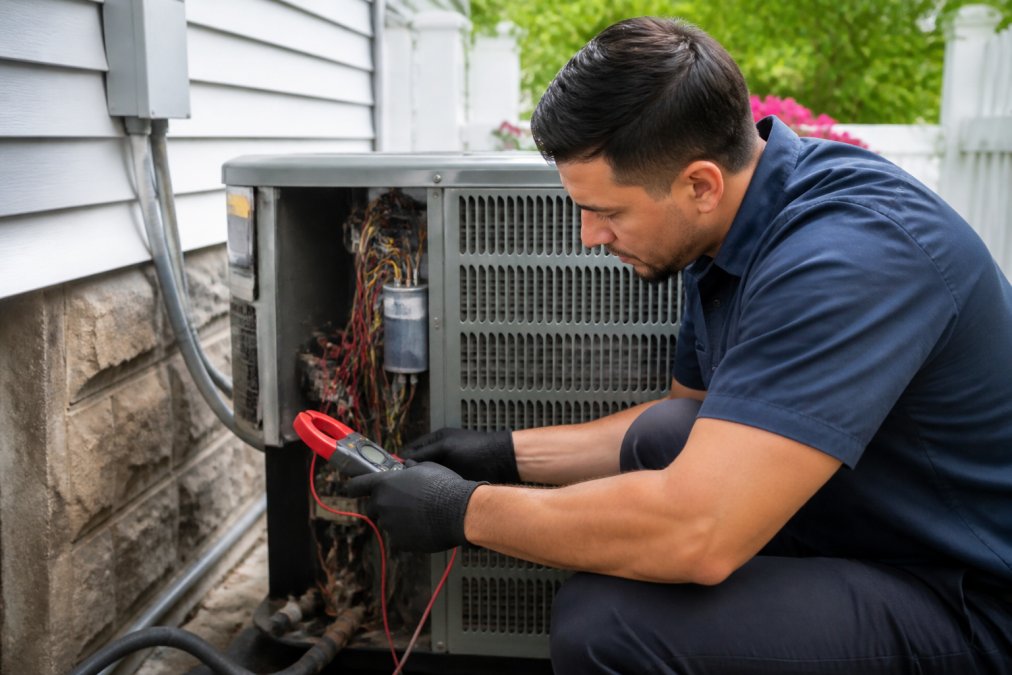
The hvac diagnostic process during an emergency is faster and more focused than a routine visit, but follows the same logic: make the situation safe first, then find the root cause rather than the symptom.
Expect these steps:
- Safety check: confirm no gas leak, electrical hazard, or carbon monoxide risk
- System inspection: examine the unit, wiring, refrigerant levels, and airflow
- Component testing: test the compressor, capacitors, igniter, or control board as relevant
- Written findings: explain what failed, why, and the repair options
Ask the technician to show you the failed part and walk you through the reading that flagged it. A confident diagnosis survives that question. A padded one usually doesn't.
After-Hours Service Fees and What Drives Them
After-hours service typically costs more than a daytime visit, and that premium is standard across the industry. The exact amount depends on your provider, the time of day, and whether the call falls on a weekend or holiday. What most guides never explain is how that premium is structured.
The Three Components of an After-Hours Bill
Most companies build after-hours pricing from three pieces. Understanding them lets you ask the right questions before you commit.
- Diagnostic or dispatch fee. This covers the technician's time to travel to your home and identify the fault. It is charged whether or not you approve the repair, and it is the number you should ask for first.
- After-hours surcharge. This is the premium for nights, weekends, and holidays. It is usually a flat add-on or a multiplier applied to the standard rate. Ask whether it is a flat fee or a percentage, because the two behave very differently on a large repair.
- Repair cost. Parts and labor for the actual fix. This is the only component that varies with what is wrong, and it is the one you can decline if the diagnosis reveals a problem you want to think about.
What Actually Drives the Premium
Four things move the after-hours number up or down:
- Time of day. A 9 p.m. call on a Tuesday is usually cheaper than a 2 a.m. call on New Year's Day.
- Season. The first cold snap and the first heat wave of the year create call surges, and some providers apply surge pricing during those windows.
- Job complexity. A failed capacitor is a quick swap; a failed compressor is a multi-hour job with a much larger parts cost.
- Whether the diagnostic fee is credited. Many providers apply the diagnostic fee toward the repair if you approve the work. This is the single most important question to ask, because it can erase the entire dispatch cost.
Before you agree to any after-hours visit, ask three questions in this order: What is the diagnostic fee? Is there an after-hours surcharge, and is it flat or a percentage? Is the diagnostic fee credited toward the repair if I approve it? Write the answers down. A provider who will not answer these clearly is telling you something.
Why We Quote Each Job Individually
Pricing at Tornado HVAC depends on the specific job, the time of the call, and the parts required, so we quote each job individually. A published flat rate would either overcharge simple jobs or undercharge complex ones, and neither serves you.
How to Avoid Billing Surprises
A few habits prevent almost every after-hours billing dispute:
- Get the diagnostic fee and surcharge quoted before the technician is dispatched, not after
- Confirm in writing whether the diagnostic fee is credited toward the repair
- Ask whether the surcharge is flat or a percentage before approving a large repair
- Keep the written recommendation the technician provides, so the scope of work is documented
- If a provider will not put the numbers in writing, call someone who will
The goal is not the cheapest after-hours call. It is knowing exactly what you are agreeing to before the van arrives, so the only surprise is how fast the problem gets fixed.
How to Prepare for a Technician's Arrival
Preparing for a technician's arrival shortens the visit and speeds the diagnosis. A few minutes of advance work on your end saves time on theirs.
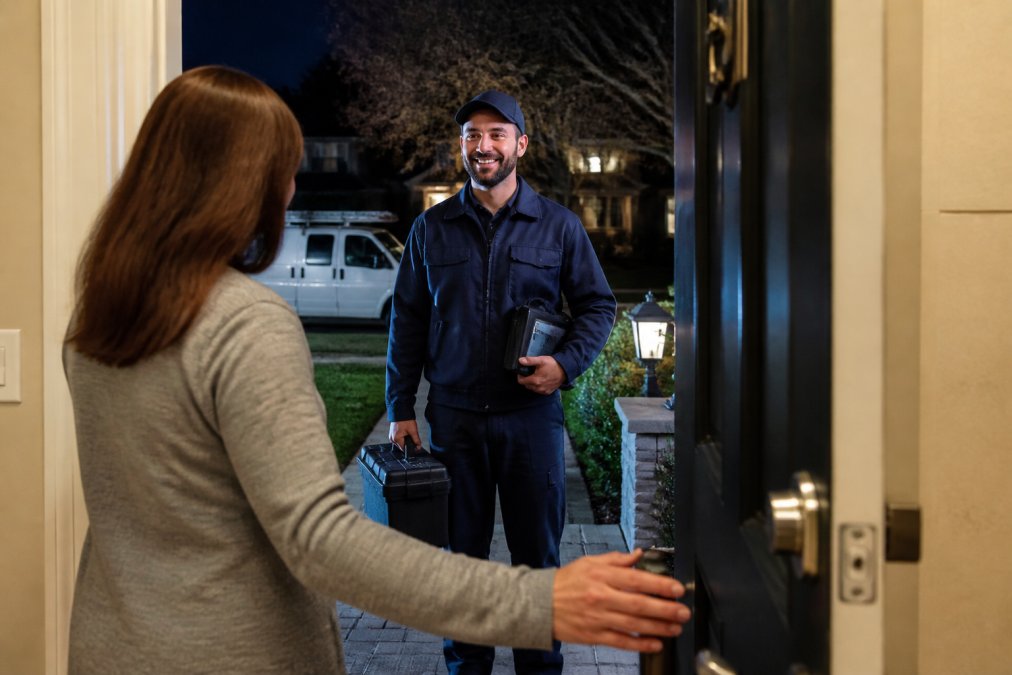
Do these before the van pulls up:
- Clear a path to the furnace, air handler, or outdoor condenser
- Secure pets in a separate room
- Note the symptoms and when they started
- Have your system's model and serial number ready
- Confirm who will be home to approve the work
Frequently Asked Questions
What constitutes a true HVAC emergency?
A true emergency involves safety risks or complete loss of heating or cooling in extreme conditions. Call immediately for carbon monoxide detector alarms, gas odors, sparking or burning smells, or a furnace that stops working when outdoor temperatures drop below freezing. No-cooling during a heat wave also qualifies, especially for households with infants, elderly residents, or anyone with medical conditions. Issues like a single room feeling warm or a thermostat needing new batteries can wait for regular business hours.
How quickly should an HVAC technician arrive for an emergency call?
Most emergency HVAC repair providers aim to arrive within 1 to 4 hours, though actual times vary by season, time of day, and call volume. During peak demand periods like a January cold snap or a July heat wave, wait times can stretch longer because on-call rotations are handling multiple calls. When you call, ask for a realistic arrival window rather than a vague promise, and request a callback if the technician gets delayed.
What factors influence emergency HVAC repair response times?
Several factors affect how fast a technician reaches your home: your distance from the dispatch center, current call volume, weather conditions, traffic, and whether the issue requires specialized parts or equipment. Peak demand during extreme weather slows response for everyone. Having your system model number, service history, and a clear description of symptoms ready when you call helps dispatchers prioritize and route the right technician faster.
What should I do while waiting for an emergency HVAC technician?
Turn off your system at the thermostat to prevent further damage, and if you smell gas or suspect a carbon monoxide leak, leave the house and call 911 from outside. For no-heat situations, gather blankets and use safe alternative heating sources away from flammable materials. Clear a path to your furnace, air handler, and thermostat so the technician can work without delay. Keep pets secured and note when the problem started and any unusual sounds or smells.