 ultimate-guide
HVAC Maintenance Morris County NJ: 2026 Homeowner Guide
Table of Contents
- What HVAC Maintenance in Morris County NJ Actually Involves
- The HVAC Tune-Up Checklist: What a Professional Visit Covers
- Benefits of Annual HVAC Maintenance: Energy Savings, Longevity, and Reliability
- When to Replace vs Repair HVAC: A Decision Framework
- Morris County Climate and Seasonal HVAC Maintenance Schedule
- Emergency HVAC Repairs and 24/7 Availability
- How to Choose an HVAC Contractor in Morris County
- Frequently Asked Questions
Last Updated: September 29, 2026
What HVAC Maintenance in Morris County NJ Actually Involves
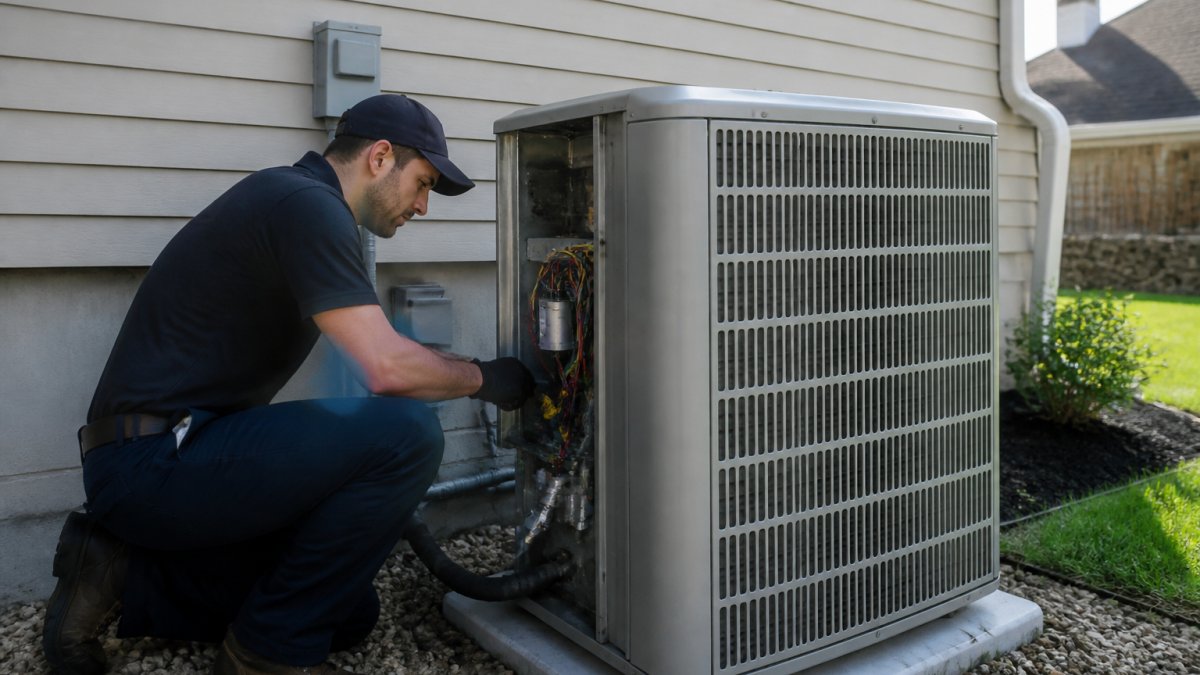
HVAC maintenance in Morris County NJ is the scheduled inspection, cleaning, calibration, and testing of a home's heating and cooling equipment so it runs safely and efficiently through every season. At Tornado HVAC, our focus is professional diagnostics, clear written recommendations, dependable workmanship, and solutions appropriate for each property's needs. We provide seasonal maintenance and tune-ups, which include checking refrigerant levels, thermostat calibration, electrical connections, and ductwork condition.
Morris County's climate makes that work non-negotiable. The region swings from humid summers in the high 80s to winters that routinely drop below freezing, and that range puts real stress on equipment. The U.S. Department of Energy guide to home heating and cooling notes that heating and cooling account for roughly half of a typical home's energy use, which is why small efficiency losses matter here.
Most homeowners don't realize how much of a tune-up is diagnostic. A technician reads pressures, amp draws, and temperature differentials to catch problems before they become breakdowns.
The HVAC Tune-Up Checklist: What a Professional Visit Covers
A standard HVAC tune-up checklist covers the furnace, air conditioner, heat pump, thermostat, and ductwork in one visit. Each component is inspected, tested, and documented so you have a written record of system condition. What separates a real tune-up from a filter swap is that most of the visit is measurement, comparing readings against the equipment's rated performance and last year's numbers.
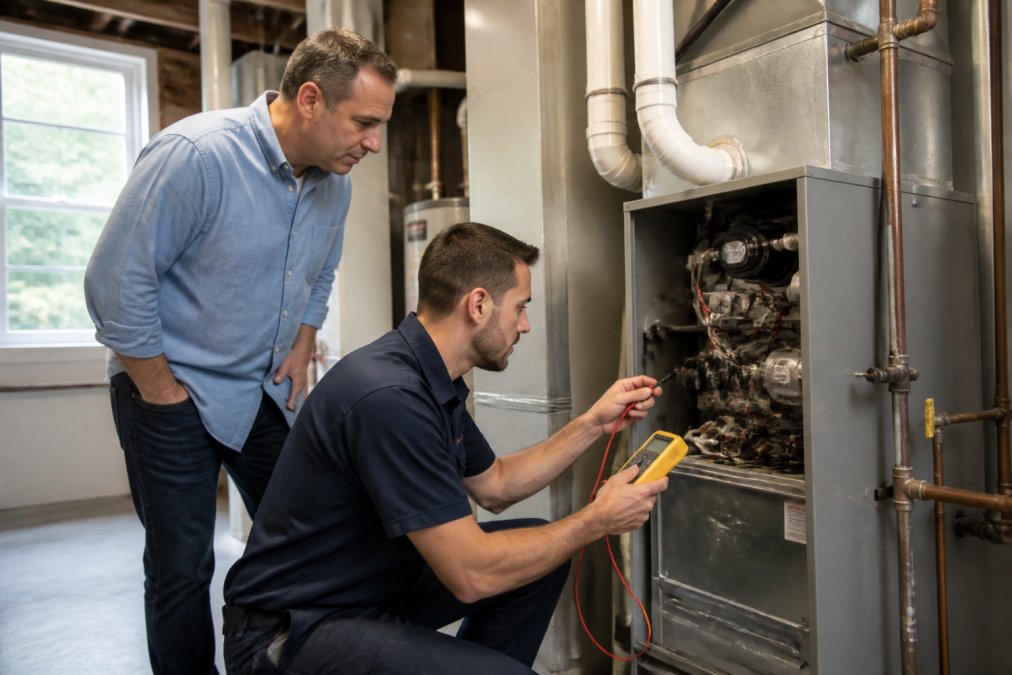
Here's what a thorough visit includes, and what the technician is actually looking for:
Cooling side (air conditioner or heat pump in cooling mode)
- Refrigerant charge check, measured by superheat and subcooling against the manufacturer's target, not just a pressure glance. A slow leak shows up here long before the system stops cooling.
- Condenser coil cleaning, outdoor coils collect pollen, grass clippings, and cottonwood in this region; a fouled coil raises head pressure and shortens compressor life.
- Condensate drain clearing and pan inspection, a clogged drain is one of the most common causes of a mid-summer shutdown, and standing water in a pan invites biological growth.
- Capacitor and contactor testing, these are the two parts most likely to fail on a hot day. A capacitor reading below its rated microfarad range is a cheap fix now and a no-cool call later.
- Temperature differential (Delta T), supply air versus return air, typically targeted in the range the manufacturer specifies. A low split points to airflow or charge problems.
Heating side (furnace, boiler, or heat pump in heating mode)
- Heat exchanger inspection, visual and, where accessible, with a combustion analyzer or inspection camera. Cracks and corrosion are the finding that matters most for safety.
- Combustion analysis on gas equipment, flue gas temperature, oxygen, and carbon monoxide readings confirm the burner is running clean and the flue is drafting properly.
- Ignition system and flame sensor, a dirty flame sensor causes intermittent lockouts that homeowners often mistake for a thermostat problem.
- Blower motor amp draw and bearing check, rising amp draw signals a motor on its way out.
- Gas pressure and burner adjustment, set to the manufacturer's specification, not left wherever it drifted.
Shared components
- Filter replacement or inspection, the single biggest lever on airflow and indoor air quality. A clogged filter starves the blower and can freeze a cooling coil.
- Thermostat calibration and cycle testing, confirm the system reads and holds temperature accurately and that staging or auxiliary heat engages when it should.
- Electrical connection tightening, loose lugs create resistance, heat, and fire risk; this is a torque-check item, not a visual glance.
- Ductwork inspection, disconnected runs, crushed flex, and leaking joints in accessible areas.
- Safety controls and limit switches, tested, not assumed.
Timing matters. A cooling tune-up is best done in spring, before the first 85-degree day, so any needed part is on hand. A heating tune-up belongs in early fall, before the first cold snap, and it's the right time to confirm a heat pump will switch to defrost and auxiliary heat correctly. Booking both in one visit leaves one half of your system unverified for a full year.
What most guides miss is the documentation.
Benefits of Annual HVAC Maintenance: Energy Savings, Longevity, and Reliability
The benefits of annual HVAC maintenance come down to three things: lower energy use, longer equipment life, and fewer emergency breakdowns. But the honest way to evaluate a maintenance plan is as a cost-benefit decision, not a slogan.
When to Replace vs Repair HVAC: A Decision Framework
The repair-versus-replace call usually comes down to age, repair cost relative to replacement, and how often the system has failed. A structured framework removes the guesswork.
Use this decision guide:
| Situation | Recommended Action | Why |
|---|---|---|
| Under 10 years old, first repair | Repair | Plenty of service life remains |
| 10-15 years old, single repair | Repair, then monitor | Cost still favors repair |
| 15+ years old, major component failure | Lean toward replacement | Remaining life is short |
| Two or more repairs in two years | Evaluate replacement | Pattern signals decline |
| Repair cost approaching half of replacement | Replace | Money is better spent on new equipment |
Morris County Climate and Seasonal HVAC Maintenance Schedule
Morris County's climate demands a two-visit maintenance schedule: a spring tune-up for cooling and a fall tune-up for heating. One annual visit leaves half your equipment unchecked for a year.
Here's a homeowner seasonal checklist:
- Spring: schedule cooling tune-up, replace filters, clear outdoor unit of debris
- Summer: check condensate drain, watch for short cycling, keep vents unobstructed
- Fall: schedule heating tune-up, test thermostat in heat mode, inspect for drafts
- Winter: keep filters clean, monitor unusual noises, know your emergency contact
Emergency HVAC Repairs and 24/7 Availability
Emergency HVAC repairs matter most when a system fails in extreme weather, and that's exactly when you need a real person on the phone. No heat in a January cold snap or no cooling in a July heat wave isn't a wait-until-Monday problem.
A few things to do while you wait:
- Check the thermostat batteries and settings first
- Confirm the breaker and the service switch are on
- Replace a clogged filter if airflow has dropped
- Note any unusual sounds, smells, or error codes
How to Choose an HVAC Contractor in Morris County
Choosing an HVAC contractor comes down to licensing, transparency, and how clearly the company communicates before you commit. The contractor who documents findings and explains options is the one worth keeping.
Ask these questions before you book:
- Are your technicians certified and background-checked, and is the company bonded and licensed?
- Will I get a written diagnosis and recommendation before work begins?
- Do you offer membership plans, and what do they cover?
- How do you handle after-hours calls?
- Can you service furnaces, boilers, heat pumps, and central air?
Frequently Asked Questions
How often should I schedule HVAC maintenance?
Twice a year is the standard recommendation: once in spring for your air conditioning and once in fall for your heating system. This timing catches small issues like worn capacitors or low refrigerant before peak season. Homeowners in Morris County often book spring AC tune-ups in April or May and furnace service in September or October. A bi-annual plan keeps both systems covered and makes it easier to remember.
What does a professional HVAC maintenance visit include?
A typical visit covers filter replacement, thermostat calibration, refrigerant level checks, lubrication of moving parts, electrical connection tightening, condensate drain clearing, and a full safety check on heat exchangers and burners. Technicians also inspect ductwork and measure airflow. You should receive a written summary of findings and recommendations so you know exactly what was checked and what may need attention before the next season.
Is a maintenance plan worth the cost if my system seems fine?
A plan makes sense for most homeowners because it shifts spending from emergency repairs to predictable upkeep. Regular tune-ups help preserve energy efficiency, extend system longevity, and reduce the chance of a mid-winter breakdown. If your system is under 10 years old and you plan to stay in your home, the cost-benefit usually favors a plan. Ask for a written list of what each visit covers before you sign up.
How do I decide between repairing and replacing my HVAC system?
Compare the repair cost against the age and efficiency of your unit. If the system is over 12 to 15 years old, needs frequent repairs, or uses outdated refrigerant, replacement often makes more sense over the next few years. For newer systems with a single failed component, repair is usually the better call. Ask for a written diagnostic and both options in writing before you commit.