 how-to
Signs HVAC Repair Is Unnecessary: 7 Fixes to Try First
Table of Contents
- How to Tell If Your HVAC Problem Is Minor or Serious
- DIY HVAC Troubleshooting Tips That Solve Most False Alarms
- 7 Signs HVAC Repair Is Unnecessary
- Signs HVAC Repair Is Necessary: When to Call a Technician
- The Benefits of Upfront HVAC Pricing Before You Approve Work
- Maintenance vs. Repair: Which One Your System Actually Needs
- Repair vs. Replace: Weighing the Cost Against System Lifespan
- Frequently Asked Questions
Last Updated: September 22, 2026
How to Tell If Your HVAC Problem Is Minor or Serious
Most HVAC problems that look serious are not. A surprising number of "emergency" calls turn out to be a flipped breaker, a clogged air filter, or a thermostat set to the wrong mode. This guide from Tornado HVAC walks through the signs HVAC repair is unnecessary, so you can fix the small stuff yourself and save your service calls for real failures.
The rule of thumb: if the problem started suddenly and nothing smells like burning or looks like water, it is usually minor. If the system is tripping breakers, leaking refrigerant, or blowing warm air in heating season, stop and call a technician.
Here is the quick breakdown:
| Symptom | Likely Cause | DIY or Call? |
|---|---|---|
| No air at all | Breaker, thermostat, filter | DIY first |
| Weak airflow | Clogged filter, blocked vents | DIY first |
| One room off | Vents, duct balance | DIY first |
| Musty smell | Standing water, dirty filter | DIY, then call if it persists |
| Burning smell | Electrical or motor issue | Call immediately |
| Breaker trips repeatedly | Compressor or wiring fault | Call immediately |
DIY HVAC Troubleshooting Tips That Solve Most False Alarms
Before you book a visit, run through the basics. In practice, a few simple checks resolve a large share of no-cool and no-heat complaints.
Check the Air Filter and Thermostat Settings First
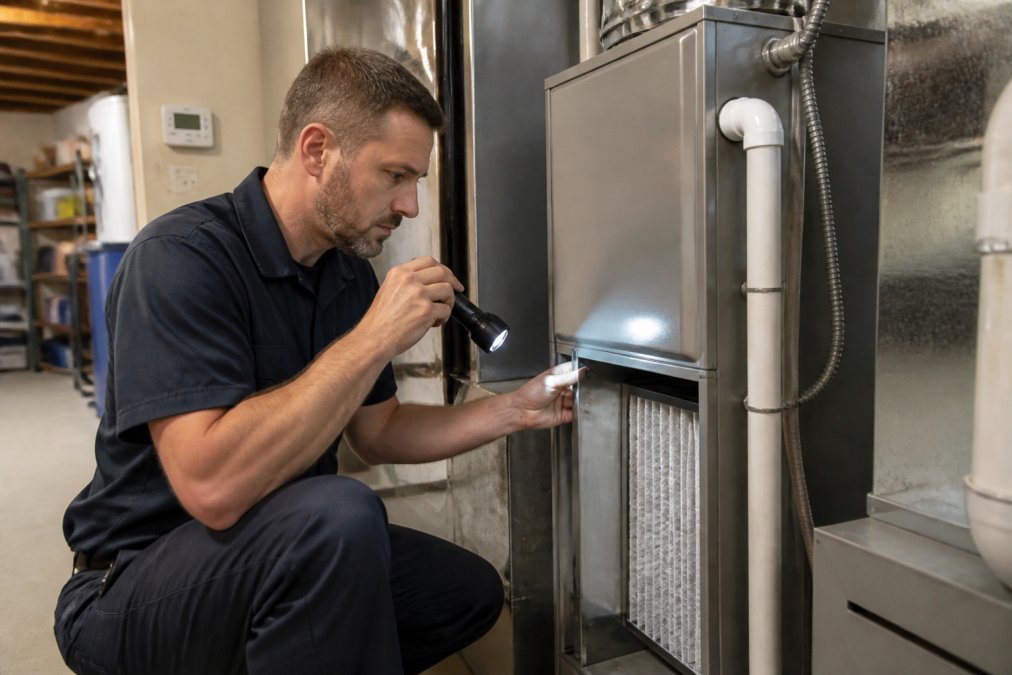
A clogged air filter is the single most common cause of weak airflow and short cycling. Pull it out and hold it up to a light. If you cannot see through it, replace it. Most homes need a new filter every one to three months, and more often during heavy use.
Next, check the thermostat:
- Confirm it is set to Heat or Cool, not Fan only or Auto with a schedule override
- Replace the batteries, even if the screen still lights up
- Make sure the set temperature is at least 3 degrees above or below room temperature
- Check that the fan setting matches what you expect
Inspect the Breaker, Condensate Drain, and Outdoor Unit
Go to your electrical panel and look for a tripped breaker. Reset it once. If it trips again right away, stop and call a technician. Repeated trips point to a compressor or wiring fault.
Then head outside:
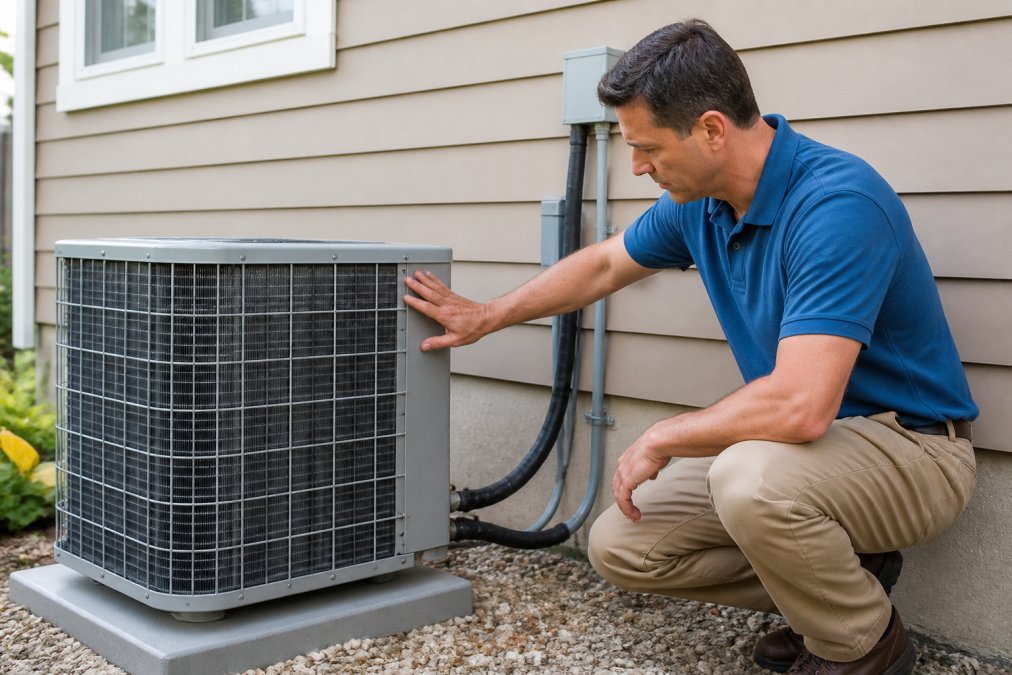
- Clear leaves, grass, and debris from around the outdoor unit
- Check that the condensate drain line is not clogged with algae or sludge
- Look for ice on the refrigerant lines, which signals an airflow or charge problem
A common mistake is resetting a breaker over and over instead of finding out why it tripped. That can turn a small repair into compressor failure.
7 Signs HVAC Repair Is Unnecessary
Here are the seven most common signs HVAC repair is unnecessary. If your system matches any of these, try the fix before you call anyone.
- Weak airflow from every vent, usually a dirty filter
- Uneven room temperatures, often a closed or blocked register
- Frequent cycling caused by a thermostat that is too close to a heat source
- Odd odors that clear after a filter change
- Thermostat glitches from dead batteries or a bad schedule
- A system that will not turn on because of a tripped breaker
- Water near the indoor unit from a clogged condensate drain
Weak Airflow or Uneven Room Temperatures
Weak airflow across the whole house almost always traces back to a restricted filter or a blower that is struggling. Replace the filter and open every supply and return register you may have closed for a renovation.
Uneven temperatures are different. One hot room usually means a duct damper is closed, furniture is blocking a vent, or the room sits at the end of a long run. Balance the dampers and give it a day.
Frequent Cycling, Odd Odors, and Thermostat Glitches
Short cycling, where the system turns on and off every few minutes, often comes from an oversized system or a thermostat placed near a lamp, vent, or sunny window. Move the thermostat or shield it, and see if the pattern changes.
Musty odors usually point to standing water in the drain pan or a wet filter. Burning smells are different. Shut the system down and call for emergency repair.
Signs HVAC Repair Is Necessary: When to Call a Technician
Some problems need a licensed HVAC technician, and no amount of troubleshooting will fix them. The trick is knowing which symptoms cross that line, and why. Below is what each warning sign actually means, so you can tell a real failure from a false alarm.
Refrigerant leaks. Ice on the copper lines, oily residue near the service valves, or a hissing sound at the outdoor unit all point to a leak. Refrigerant is a sealed system, it does not get "used up" like fuel. If the charge is low, refrigerant escaped somewhere, and topping it off without finding the leak just delays the next failure. This is a technician job, full stop.
A breaker that trips more than once. One trip can be a fluke. Two trips in a row means something is drawing more current than the circuit can handle, usually a failing compressor, a shorted motor winding, or damaged wiring. Reset it once. If it trips again, leave it off and call.
A compressor that hums but will not start. That hum is the compressor trying to start against locked rotors or a failed capacitor. Running it in that state overheats the windings and can turn a capacitor replacement into a full compressor or system replacement.
No heat during a cold snap. A furnace that runs but blows cold air, or a heat pump stuck in defrost, is not a filter problem. Ignition, flame sensor, control board, and reversing valve faults all live behind the service panel and require diagnostic tools to isolate.
Water pooling around the furnace or air handler. A clogged condensate drain you can clear yourself. Water coming from the unit itself, a cracked drain pan, a failed condensate pump, or a frozen evaporator coil thawing, is a different problem. Standing water near electrical components is also a safety issue.
A system over 15 years old that keeps failing. Age alone is not a reason to call. Age plus a pattern of repeat failures is. Once a system is past its expected service life and you are calling every season, the math shifts from repair to replacement.
Loud grinding, screeching, or banging from the outdoor unit. Bearings, fan blades, and internal components do not fix themselves.
The Benefits of Upfront HVAC Pricing Before You Approve Work
Transparent pricing protects you, but the bigger question is whether the repair is worth approving at all. That is where a simple cost-benefit framework helps, and it is the piece most homeowners never get before they sign off on work.
ACCA guidance on choosing a qualified HVAC contractor
Maintenance vs. Repair: Which One Your System Actually Needs
Maintenance prevents problems. Repair fixes them after they appear. Most homeowners need both, but not at the same time.
- Choose maintenance if your system runs fine but has not been serviced in a year
- Choose repair if something is broken right now
- Choose both if your system is aging and showing repeated issues
Repair vs. Replace: Weighing the Cost Against System Lifespan
Repair makes sense when the fix is small and the system is young. Replace when repairs pile up or the unit is near the end of its expected life.
Use this simple framework:
- Under 10 years old, one repair: fix it
- 10 to 15 years old, first major repair: weigh the cost against a new system
- Over 15 years old, repeated failures: replacement usually wins
- Refrigerant leak on an older unit: replacement is often the better call
ACCA guidance on choosing a qualified HVAC contractor
Frequently Asked Questions
What are simple HVAC troubleshooting steps to try before calling a pro?
Start with the air filter: a clogged filter restricts airflow and can mimic a breakdown. Next, confirm the thermostat is set to the right mode and temperature, then check the breaker for a tripped switch. Look at the condensate drain for clogs and clear debris from around the outdoor unit. If none of these resolve the issue, that is when a diagnostic visit makes sense.
How can I tell if my HVAC issue is just a dirty filter?
Weak airflow, uneven temperatures, and higher utility bills are the classic filter symptoms. Pull the filter and hold it up to a light. If you cannot see through it, airflow is restricted. Replace it with the correct size, run the system for an hour, and see if performance improves. If the problem persists after a fresh filter, the cause is likely elsewhere in the system.
When should I stop troubleshooting and call a professional HVAC technician?
Stop when you see a burning smell, hear metal-on-metal grinding, notice ice on the refrigerant lines, find water pooling near the unit, or see the breaker trip repeatedly. These point to electrical faults, refrigerant leaks, or compressor failure, which require licensed work. Also call if the system will not start after you have checked the thermostat, filter, and breaker.
Is it worth paying for regular maintenance if my system seems fine?
Maintenance catches small problems before they become repairs: a loose blower connection, a failing capacitor, or a drain line starting to clog. It also keeps the system running at peak energy efficiency, which lowers utility costs over time. A seasonal tune-up is generally cheaper than the emergency service call and parts replacement it helps you avoid.