 How-to
7 HVAC Troubleshooting Steps Before You Call a Pro
Last Updated: November 20, 2026
Quick Summary
HVAC troubleshooting starts with four checks: thermostat mode and set temperature, power at the indoor unit, the breaker, and the air filter. Confirm the thermostat is on Cool or Heat, reset a tripped breaker once, and replace a filter you can't see through. If those pass and the problem continues, call a licensed technician.
- A furnace won't run with a loose access panel because a safety switch cuts power.
- Most homes need a new air filter every one to three months, more often with pets.
- Closed vents in unused rooms raise duct pressure and weaken airflow everywhere else.
- Stop and call a technician for a gas smell, repeated breaker trips, or a CO alarm.
- Note the thermostat setting versus room temperature and the filter size before booking.
Table of Contents
- HVAC Troubleshooting Checklist: Start Here Before You Call
- Air Conditioner Not Working Troubleshooting: No Cooling or Weak Airflow
- Furnace Troubleshooting: No Heat, Cold Air, and Unusual Noise
- Safety Boundaries and When to Call a Professional
- What to Tell an HVAC Technician Before You Book
- Why Repeat Failures Point to a Bigger Problem
- Frequently Asked Questions
HVAC Troubleshooting Checklist: Start Here Before You Call
Many no-heat and no-cool problems come down to a simple fix a homeowner can often make in minutes. HVAC troubleshooting starts with four checks: thermostat settings, power at the indoor unit, the breaker, and the air filter.
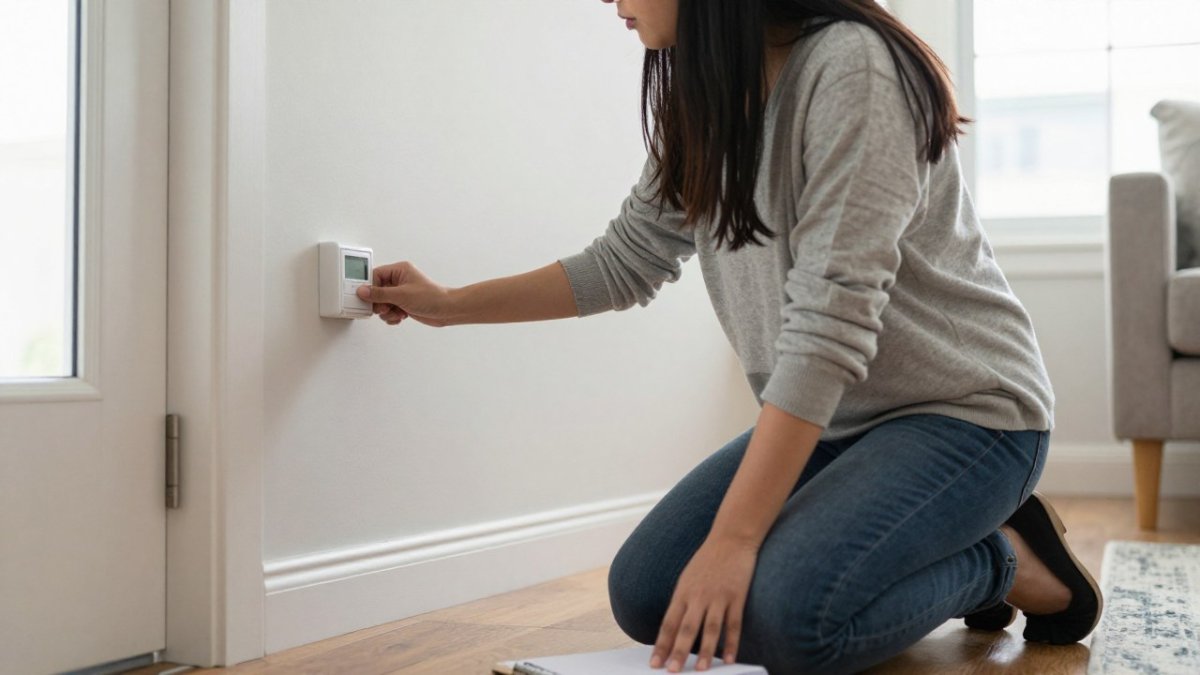
1. Check the thermostat mode and temperature setting
Confirm the mode is Cool or Heat, not Fan or Off, and compare the set temperature to the room temperature. Smart thermostats can hold a schedule you may have forgotten about, so check the schedule settings in the app or on the unit.
2. Confirm the HVAC system has power
Find the indoor power switch, usually a toggle near the furnace or air handler, and check the breaker panel for one sitting between On and Off. Reset it once; if it trips again, call a technician.
For a fuller walkthrough, see our guide on why your HVAC is blowing air but not heating or cooling. If the filter is the culprit, our post on how to clean HVAC air filters properly covers the safe way to do it.
3. Verify the furnace access panels are closed
A furnace won't run with a panel loose, many units have a safety switch that cuts power when the door is off. Push each panel firmly into place and listen for the blower within a minute or two.
4. Inspect and replace a dirty air filter
A blocked filter chokes airflow and can freeze a coil or trip a high-limit switch. Hold it up to the light; if you can't see through it, replace it. Most homes need a change every one to three months, more often with pets or heavy dust.
5. Check supply and return vents for blockage
Open every supply vent and return grille, furniture, rugs, and curtains block more vents than people realize. Closed vents in unused rooms raise duct pressure and weaken airflow everywhere else.
| Check | Where to Look | Time | If It Fails |
|---|---|---|---|
| Thermostat mode | Wall or app | 2 min | Reset mode and hold |
| Circuit breaker | Electrical panel | 3 min | Reset once, then call |
| Air filter | Filter slot | 5 min | Replace it |
Time
Air Conditioner Not Working Troubleshooting: No Cooling or Weak Airflow
When the AC runs but the house stays warm, the cause is usually airflow or the outdoor unit. Air conditioner not working troubleshooting follows the same logic: confirm air is moving, then confirm the outdoor unit is running.
What to check at the outdoor unit
Confirm the fan spins and the compressor runs, look for ice on the refrigerant lines, clear debris from the cabinet, and check that the disconnect box is on.
If the house still won't cool, it's time for professional AC repair in North NJ. Our team diagnoses the system and provides clear written recommendations.
Furnace Troubleshooting: No Heat, Cold Air, and Unusual Noise
Furnace troubleshooting splits into three symptoms: no heat at all, the blower running with cold air, and strange sounds.
No heat at all
Check the thermostat, breaker, and access panels first; if those pass, look at the flame. A furnace that clicks but won't light often has a dirty flame sensor or a closed gas valve. See our article on a furnace that clicks but won't ignite.
Cold air from the vents
The blower runs but the burner doesn't, usually because the unit locked out after a failed ignition. Some furnaces reset after a power cycle at the switch; if it locks out again, stop, a repeat lockout means a part is failing.
Unusual noise
Banging means expanding ducts or a loose panel; squealing means a worn blower belt or motor bearing; rumbling means the burner needs attention. For a deeper walkthrough, read our guide on why a furnace isn't blowing hot air.
Heat pump and ductless systems
Heat pumps need the same checks plus confirming the outdoor unit defrosts in cold weather. Ductless heads have washable filters behind the front panel, clean those first.
Safety Boundaries and When to Call a Professional
Stop and call a licensed technician for a gas smell near the furnace or water heater, repeated breaker trips, ice on refrigerant lines that returns after thawing, a burning smell or scorched wiring, a cracked heat exchanger or CO alarm, or any work requiring a sealed panel or refrigerant.
The U.S. Consumer Product Safety Commission warns that fuel-burning appliances need professional service when they show signs of malfunction. Carbon monoxide is odorless, so trust the detector, not your nose (the CDC).
What to Tell an HVAC Technician Before You Book
Good notes cut diagnosis time. Write down what the system is doing and when it started, the thermostat setting versus room temperature, whether the outdoor unit runs, any noise, smell, or ice, the filter size and last change date, and your system's age and brand.
Why Repeat Failures Point to a Bigger Problem
One breakdown is normal; three in a season is a pattern.
Residents in Clifton and across Bergen, Essex, Morris, Passaic, and Union counties can reach our team 24/7.
Get started with Tornado HVAC and get your heat or cooling back on track.
Frequently Asked Questions
What should I check before calling an HVAC technician?
Run through the basics first: confirm the thermostat is set to the right mode and temperature, check that the breaker and indoor power switch are on, replace a dirty air filter, and make sure supply and return vents are open and unblocked. If the system still will not heat or cool after these HVAC troubleshooting steps, note what you found and call for professional repair.
How can I tell if my HVAC problem is an emergency?
Treat it as an emergency if you smell gas, see sparks or scorch marks, hear loud banging or grinding, or have no heat during a cold snap with vulnerable people at home. In those cases, stop troubleshooting, shut the system off if it is safe, and call for 24/7 emergency service. Routine issues like weak airflow or a system that will not start can usually wait for a scheduled visit.
What information should I give an HVAC technician when I call?
Share your system type (furnace, heat pump, central air, or boiler), what it is doing or not doing, when the problem started, and what you already checked, such as thermostat settings, breakers, and filter condition. Mention any unusual noises or smells and your address so the dispatcher can confirm coverage. Clear details help the technician arrive prepared and diagnose faster.