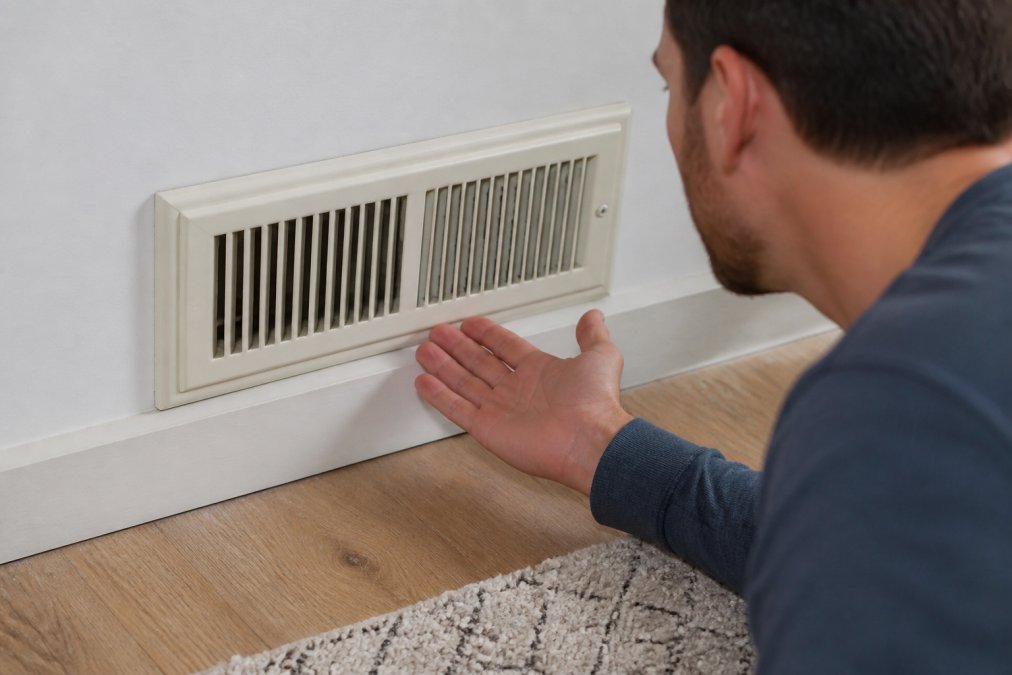
 how-to
Why Is My HVAC Blowing Air? Troubleshooting Guide
Table of Contents
- Quick Checks Before You Troubleshoot Your HVAC Blowing Air
- How to Check HVAC Air Filter and Airflow Problems
- HVAC Blower Motor Troubleshooting: Fan and Motor Checks
- Thermostat Settings and Calibration: Auto Mode vs Fan Setting
- Frozen Coils, Refrigerant, and Outdoor Condenser Issues
- Electrical Problems: Tripped Breakers and Capacitors
- DIY vs. Professional Repair: Safety and Seasonal Timing
- When to Call for 24 Hour Emergency AC Repair
- Frequently Asked Questions
Last Updated: September 13, 2026
Quick Checks Before You Troubleshoot Your HVAC Blowing Air
When your HVAC is blowing air that isn't cold or hot enough, the cause is usually one of five things: a clogged filter, a thermostat set wrong, a frozen coil, a failing blower motor, or an electrical fault. Checking them in order saves a service call.
Before you touch anything, run through this list:
- Confirm the thermostat is set to cool or heat, not fan only.
- Check that the air filter isn't clogged.
- Look for ice on the indoor or outdoor unit.
- Confirm the breaker for the air handler and condenser hasn't tripped.
- Note whether the blower is running at all.
If the system runs but the air feels wrong, it's usually airflow or refrigerant. If nothing runs, it's usually electrical.
How to Check HVAC Air Filter and Airflow Problems
The fastest airflow check is to pull the air filter and hold it to a light. If you can't see light through it, it's restricting airflow and needs replacing. A dirty filter is the most common reason a system blows weak air.
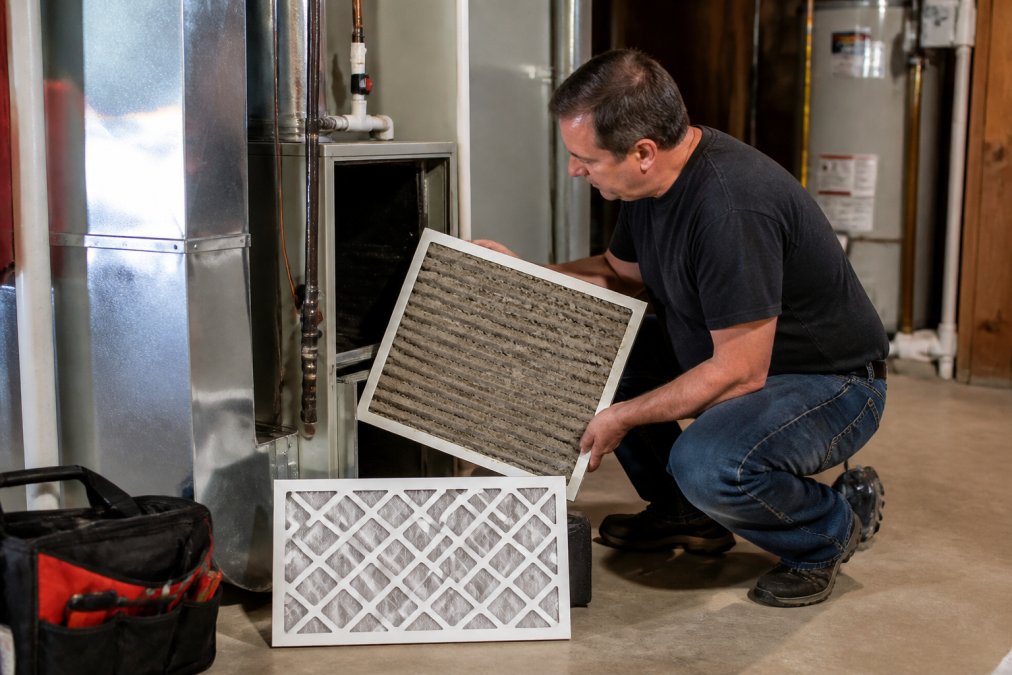
How to check the filter and airflow:
- Turn the system off at the thermostat.
- Slide out the filter and check the frame for size and airflow arrow.
- Hold it to a light; if it's gray and matted, replace it.
- Check that supply vents and return-air grilles aren't blocked.
Most homes need a filter change every 1-3 months; homes with pets or heavy dust need it more often (energy.gov). Our technicians check filter condition and static pressure on every diagnostic visit.
Signs of Airflow Restriction Beyond the Filter
A clean filter doesn't always solve weak airflow. Restricted ductwork, a closed damper, or a crushed flex duct can choke the system just as badly. Watch for rooms that never reach temperature, a strained blower, whistling vents, or short-cycling. If airflow is uneven room to room, the problem is in the ductwork, not the filter. We inspect ductwork and dampers as part of a full diagnostic.
HVAC Blower Motor Troubleshooting: Fan and Motor Checks
Blower motor troubleshooting starts with listening. A failing blower usually announces itself with a hum, a rattle, or silence when the fan should run, and the system may run but deliver almost nothing.
Key checks:
- Set the thermostat fan switch to on. Does the blower start?
- Listen for a hum without spinning, a sign of a seized bearing or bad capacitor.
- Check for a burning smell near the air handler.
- Look for a tripped breaker or a blown fuse on the control board.
If the blower hums but won't spin, the capacitor is often the culprit. If it's silent, the motor or a control board relay may have failed.
When the Blower Runs but Air Feels Weak
A running blower with weak airflow points to a restriction downstream: a clogged evaporator coil, collapsed ductwork, or a damper stuck closed. We measure static pressure and airflow at the air handler and at the vents to pinpoint where the restriction is.
Thermostat Settings and Calibration: Auto Mode vs Fan Setting
A thermostat set to fan on runs the blower continuously, even with no heating or cooling demand, that's why your system can blow air that feels neither warm nor cool. Switch to auto so the fan runs only when the system is actively heating or cooling.
What the Mode Tells You
- Cool mode, warm air: the outdoor condenser isn't rejecting heat, or the indoor coil is frozen.
- Heat mode, cool air: on a heat pump, often normal for a few minutes. On a furnace, the burner isn't lighting or the blower is outrunning the heat exchanger.
- Fan only: the blower runs, but no heating or cooling happens.
- Auto: the blower runs only on a call for heat or cool.
- Emergency heat: locks out the outdoor unit and runs electric resistance strips. Meant for defrost failures and extreme cold, not everyday use, stuck here, the system blows warm air but runs up the electric bill fast.
Heat Pump Defrost: The Winter Exception
A heat pump in heating mode periodically reverses to melt frost off the outdoor coil. During that few-minute cycle, the indoor blower may keep running and the air at the vents can feel cool, that's the defrost cycle doing its job, not a failure. Not normal: defrost cycles every few minutes, ice that never clears, or the system stuck in defrost with auxiliary heat never kicking in. Those point to a failed defrost board, a bad outdoor sensor, or a reversing valve issue, all technician territory.
Calibration and Sensor Drift
A thermostat reading 4-5 degrees off calls for cooling at the wrong time (energy.gov). Cross-check with a separate thermometer a few feet away; a consistent gap over 2-3 degrees is worth addressing. Placement matters too: a thermostat on an exterior wall, in direct sun, above a supply vent, or near a lamp reads warmer than the room and short-cycles the system. Relocating one is a wiring job, not a DIY swap.
Smart Thermostat Diagnostics
Wi-Fi thermostats add a layer most guides skip. Before assuming a mechanical failure, check the app:
- Is the thermostat online? A dropped Wi-Fi connection can leave the schedule frozen and the system running on the last command.
- Is the equipment type set correctly? A thermostat configured for a conventional furnace but wired to a heat pump runs the wrong sequence, often blowing cool air in heat mode.
- Are there fault codes or alerts? Many log short cycling, long runtimes, and auxiliary heat usage, frequent on-off cycles signal a refrigerant or airflow issue, not just the thermostat.
- Is a schedule or geofencing rule overriding you? An expired hold or eco mode can leave the system in fan only or a low setpoint.
- Is the C-wire supplying power? A thermostat that loses its common wire can reboot mid-cycle and drop the call.
If the app shows the thermostat calling for cool but the outdoor unit never starts, the problem is downstream, the control board, contactor, or low-voltage wiring. A technician can trace that in minutes with a multimeter.
Frozen Coils, Refrigerant, and Outdoor Condenser Issues
A frozen evaporator coil blocks airflow and makes the system blow warm air. Ice forms when airflow drops or refrigerant runs low. Turn the system off, let the coil thaw, and check the filter first. If ice returns, you have a refrigerant or airflow problem that needs a technician.
The outdoor condenser needs clear airflow too. A condenser packed with grass clippings, leaves, or cottonwood fluff can't reject heat, so the system runs long and blows lukewarm air. Keep two feet of clearance and rinse the coil fins gently with a hose.
Low refrigerant charge is not a DIY fix (the EPA). Refrigerant is regulated, and handling it requires certification. If you see ice on the refrigerant lines or hear hissing, call a licensed technician.
Electrical Problems: Tripped Breakers and Capacitors
A tripped breaker or a failed capacitor stops the system cold. Check the breaker panel first. If the HVAC breaker has tripped, reset it once. If it trips again immediately, stop and call a technician, repeated tripping signals a short or failing component.
Capacitors give the compressor and blower motor the jolt to start. When one weakens, the motor may hum, struggle, or fail to start. A technician can test capacitance in minutes and replace it on the spot.
Loose electrical connections at the air handler or condenser can also cause intermittent failures. Tightening and testing connections is part of a proper diagnostic, not something to improvise.
DIY vs. Professional Repair: Safety and Seasonal Timing
Here's the line between what you can safely check and what will hurt you or the equipment.
Safe for Any Homeowner
- Replacing the air filter (every 1-3 months, more often with pets or heavy dust)
- Switching the thermostat between auto, fan, heat, and cool
- Clearing leaves, grass clippings, and cottonwood fluff from around the outdoor condenser
- Resetting a tripped breaker once
- Confirming supply and return vents aren't blocked
- Checking the thermostat app for fault codes on a smart thermostat
Stop and Call a Technician
These are the thresholds. If you hit any of them, shut the system off at the thermostat and call.
- The breaker trips again immediately after one reset. Repeated tripping means a short or a failing component.
- You smell burning, see sparks, or see scorch marks at the air handler, condenser, or breaker panel.
- You see ice on the indoor coil or the refrigerant lines. Running a frozen system can slug the compressor with liquid refrigerant, the most expensive failure in the system.
- You hear hissing or see oily residue near refrigerant lines. That's a leak, and refrigerant handling requires EPA Section 608 certification.
- Water is pooling near the air handler or the condensate drain is overflowing. That's a property-damage risk.
- The blower hums but won't spin, or the outdoor fan won't turn. Capacitors and motors are live electrical components even with the thermostat off.
- You have a gas furnace and smell gas, or the burner won't light. Gas work is licensed-only.
- The system is short-cycling, starting and stopping every few minutes. That stresses the compressor and usually points to refrigerant, airflow, or a control issue.
Seasonal Timing Changes the Diagnosis
The same symptom means different things by season.
Summer (cooling mode): Air blowing warm usually means low refrigerant, a dirty outdoor coil, a frozen evaporator coil, or a failed capacitor on the condenser fan. Start with the filter and outdoor unit clearance.
Winter (heating mode): Air blowing cool is often normal for a few minutes on a heat pump during defrost. If it never warms up, check whether the thermostat is in emergency heat, whether auxiliary heat is staging in, and whether the outdoor unit is running. On a furnace, cool air usually means the burner isn't lighting or the blower is running without a call for heat.
Shoulder seasons (spring and fall): This is when maintenance pays off. A tune-up before the first heat wave or cold snap catches small issues, a weak capacitor, a low charge, a dirty coil, before they become emergency calls.
What a Proper Diagnostic Looks Like
A real service call is not a guess. The technician should measure static pressure at the air handler, check refrigerant charge against the manufacturer's subcooling or superheat target, test capacitor microfarads against the rated value, verify thermostat operation, and inspect electrical connections, then explain what's wrong in plain language and provide written recommendations before any work begins.
We provide seasonal tune-ups that include filter checks, coil cleaning, electrical inspections, and refrigerant charge verification, with written recommendations before any repair or replacement work starts.
| What You Can Do | What Needs a Pro | Why |
|---|---|---|
| Replace the air filter | Refrigerant charge | Regulated, needs EPA certification |
| Switch thermostat to auto | Capacitor replacement | Live electrical components |
| Clear debris from condenser | Blower motor replacement | Mechanical and electrical risk |
| Reset a tripped breaker once | Ductwork repair | Requires airflow measurement |
| Check smart thermostat app | Control board diagnosis | Low-voltage tracing and metering |
When to Call for 24 Hour Emergency AC Repair
Call for 24 hour emergency AC repair when the system won't cool at all in extreme heat, when you smell burning, see sparks, or find water leaking near the air handler. These are safety and property risks, not inconveniences.
We provide 24/7 emergency service for homeowners across Bergen, Essex, Morris, Passaic, and Union counties. A dispatcher logs your issue and sends a technician with the parts most likely needed.
What to Expect During a Service Call
A proper service call starts with a full system diagnostic, not a guess. The technician checks airflow, refrigerant charge, electrical connections, and thermostat operation, then explains what's wrong in plain language.
We provide written recommendations before any work begins, so you know what's being done and why. If a repair is the right call, we repair it. If replacement makes more sense, we say so and explain why.
When your system blows air that never gets comfortable, the cause is usually one of a handful of fixable problems: a clogged filter, a thermostat set to fan, a frozen coil, a tired blower, or a tripped breaker. Working through them in order saves time and money. When the fix needs a licensed hand, Tornado HVAC offers 24/7 emergency service, professional diagnostics, and written recommendations before any work starts. Schedule service with Tornado HVAC and get your system diagnosed right the first time.
Frequently Asked Questions
Should I turn my AC off if it's blowing hot air?
Yes. Turn the system off at the thermostat if the air coming from the vents is warm during a cooling cycle. Continued operation can stress the compressor and worsen a refrigerant or airflow problem. Check the air filter first, confirm the thermostat is set to cool and auto mode, then schedule a diagnostic visit if the air stays warm. A technician can test refrigerant charge, the capacitor, and the compressor before any repair is recommended.
Why is my HVAC blowing cool air but not cooling my house?
Cool air that never reaches the thermostat setpoint usually points to low refrigerant charge, a frozen evaporator coil, or restricted airflow. A clogged air filter or a failing blower motor reduces how much conditioned air reaches each room. Start by checking the filter and confirming the outdoor condenser unit is running. If the coil is iced over or the refrigerant charge is low, a licensed technician needs to diagnose and repair it.
Can a dirty air filter cause my HVAC to blow room temperature air?
A heavily loaded filter restricts airflow across the evaporator coil, which can cause the coil to freeze and the system to stop cooling. The blower keeps moving air, but it feels close to room temperature. Replace the filter with the correct size and check the coil for ice. If the system still blows warm air after the filter change and a full thaw, the issue is likely refrigerant or a component failure that requires professional HVAC system diagnostics.
How do I know if my HVAC blower motor is failing?
Common signs include weak airflow at every vent, a humming sound with no air movement, rattling or screeching during the cooling cycle, and a blower that runs intermittently. A failing capacitor or a worn blower motor can also trip the circuit breaker. Check the breaker once, and if it trips again, stop and call a technician. Testing voltage and the capacitor requires a multimeter and training, so leave that step to a professional.