 How-to
How to Clean HVAC Air Filters Properly at Home
Last Updated: November 7, 2026
Quick Summary
To clean a reusable HVAC filter, turn off the system, remove the filter, tap or vacuum off loose dust, and rinse it with lukewarm water from the clean side. Let it air-dry completely for at least 24 hours before reinstalling it in the airflow direction, which is how to clean hvac air filters properly.
- Turn off the system at the thermostat before removing the filter.
- Rinse with lukewarm water from the clean side until the water runs clear.
- Soak in mild dish soap and water for about 15 minutes if deeper cleaning is needed.
- Air-dry the filter at least 24 hours, since a damp filter can grow mold.
- Check washable filters monthly in heavy-use seasons, and clean them every one to three months.
Table of Contents
- How to Tell a Washable Filter from a Disposable One
- How to Clean a Reusable HVAC Air Filter Step by Step
- How Often to Clean Washable HVAC Filters and Common Cleaning Mistakes
- Frequently Asked Questions
How to Tell a Washable Filter from a Disposable One
Most homeowners can tell with a quick look. Check the frame and label for words like "washable," "reusable," or "permanent." Disposable filters usually have a cardboard frame and thin pleated media. To pick the right rating for your home, see choosing the right MERV rating.
Here is a simple way to check:
- Frame: Metal or sturdy plastic often means reusable; cardboard means disposable.
- Label: Manufacturers print the filter type on the frame edge.
- Media: Thick mesh or foam can be rinsed; thin, paper-like pleats cannot.
If the label is missing, check your equipment manual or the manufacturer's website first. Washing the wrong type can damage it and reduce airflow.
How to Clean a Reusable HVAC Air Filter Step by Step
Before you start learning how to clean hvac air filters properly, turn off the system at the thermostat so the blower doesn't pull dirt into the ductwork while the filter is out.
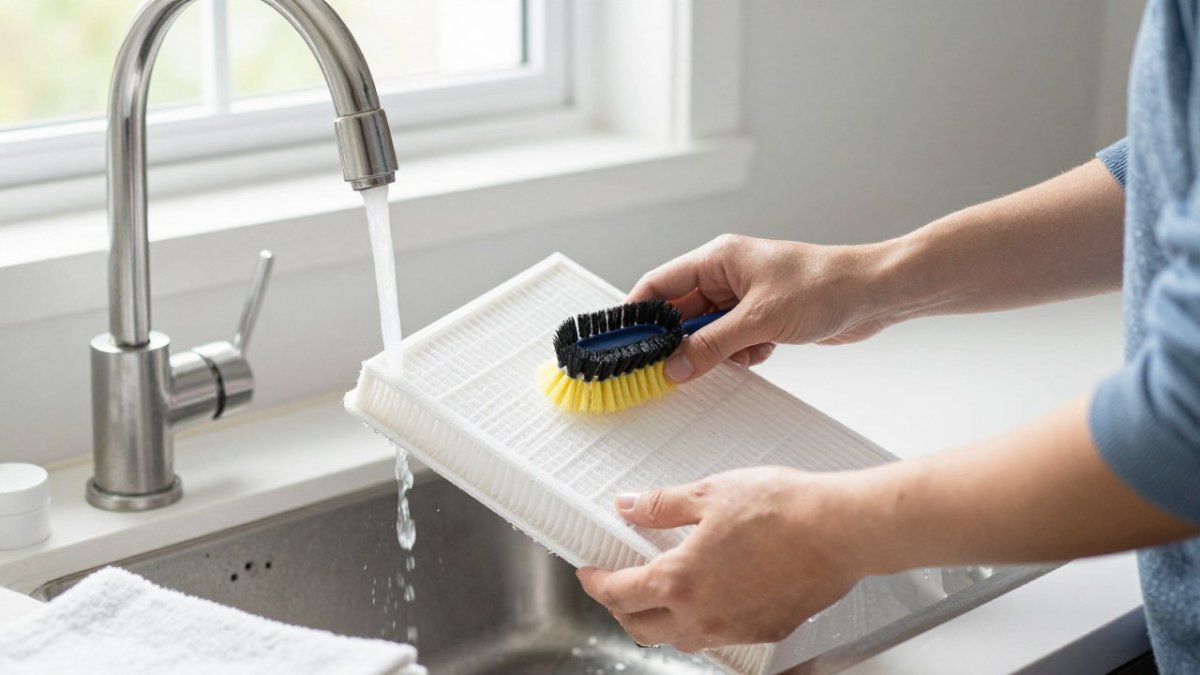
- Remove the filter. Slide it out, noting the airflow arrow.
- Remove loose dust. Tap it gently outside, or use a soft brush or vacuum on low.
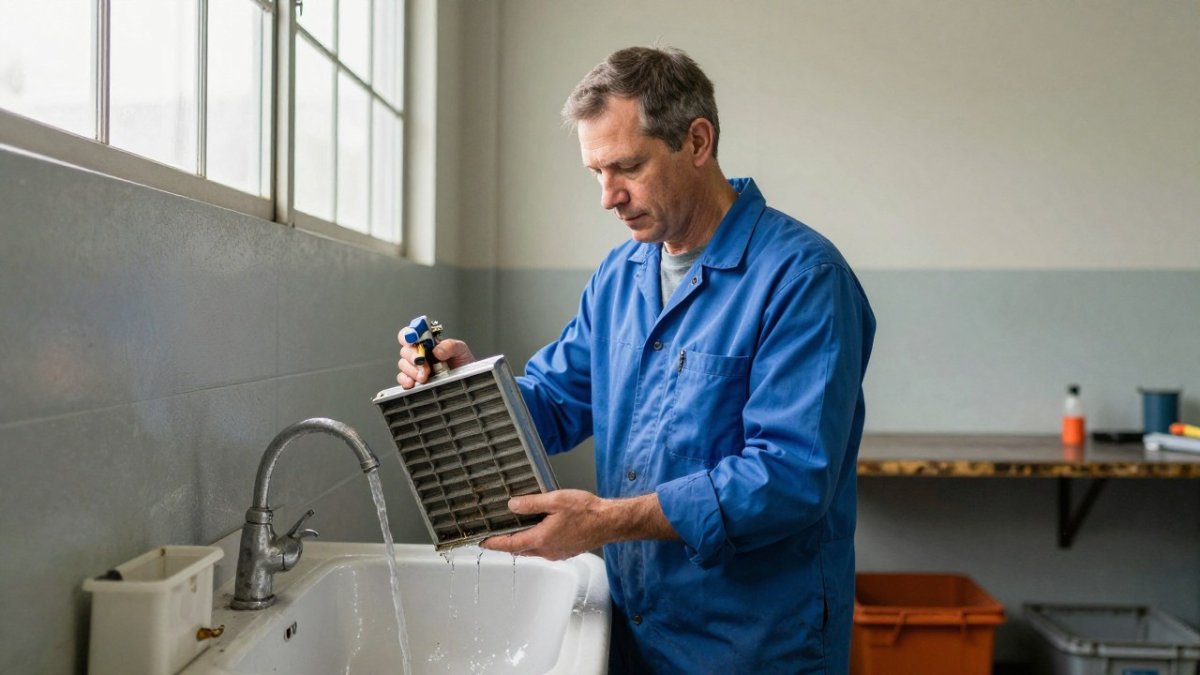
- Rinse with water. Run lukewarm water from the clean side to push dust out the dirty side.
- Clean deeper if needed. Soak in mild dish soap and water for about 15 minutes, then rinse.
- Let it dry completely. Air-dry at least 24 hours; a damp filter can grow mold.
- Reinstall in the right direction. Match the airflow arrow, then turn the system back on.
Never run the system with a wet filter, moisture can damage the blower and encourage mold.
The steps below cover the full process, with the timing for each stage.
| Step | What to do | Time or frequency |
|---|---|---|
| Turn off system | Switch off at the thermostat | Before you start |
| Remove filter | Slide out, noting the airflow arrow | Quick |
| Remove loose dust | Tap gently outside or vacuum on low | Quick |
| Rinse with water | Run lukewarm water from the clean side | Until clear |
| Deep clean if needed | Soak in mild dish soap and water | About 15 minutes |
| Let it dry | Air-dry completely | At least 24 hours |
| Reinstall | Match the airflow arrow, then turn on | Before restarting |
How Often to Clean Washable HVAC Filters and Common Cleaning Mistakes
Check washable filters monthly during heavy-use seasons, and clean them when visibly dusty or about every one to three months, since knowing how to clean hvac air filters properly only helps if you do it on time. Homes with pets, renovation dust, or heavy outdoor allergens may need more frequent cleaning. For a full checklist to keep the rest of the system on track, see the HVAC maintenance checklist.
Common mistakes to avoid:
- High-pressure water, which can tear the media.
- Skipping drying, which invites mold and odors.
- Installing backward, which reduces filtration.
- Waiting too long, which strains the system and raises energy use.
If airflow seems weak after cleaning, check that the filter is fully dry and seated correctly. For persistent issues, a licensed technician can inspect the system. To weigh whether ongoing professional upkeep suits you, read whether an HVAC maintenance plan is worth it. Tornado HVAC provides professional diagnostics and written recommendations for homes and businesses throughout Bergen, Essex, Morris, Passaic, and Union counties.
Keeping your filter clean is one of the simplest ways to protect your system. If your HVAC unit is still not performing well after cleaning, schedule service with Tornado HVAC for a professional diagnosis.
Frequently Asked Questions
Can you vacuum a washable HVAC filter?
Yes, a vacuum with a soft brush attachment is a good first step to remove loose dust and debris from a washable filter before any water is used. Work gently from the clean side of the filter toward the dirty side so you push debris away from the media rather than deeper into it. Vacuuming alone does not remove oily buildup or fine dust that has packed into the material, so the filter still needs a rinse once the loose debris is gone. Check the filter's frame and media for tears while you work, and replace any filter that is damaged.
How often should you clean a washable HVAC filter?
Check a washable filter monthly, especially during heavy heating or cooling seasons, and clean it when you see visible dust buildup on the media. Homes with pets, renovation dust or several occupants usually need more frequent checks. Follow the cleaning interval in your system or filter manufacturer's instructions, because material and design vary. A filter that looks dark or restricts airflow should be cleaned or replaced sooner rather than later.
How long should an HVAC filter dry before you reinstall it?
Let the filter air-dry completely before reinstalling it, which can take several hours to a full day depending on the material and the humidity in the room. Shake off excess water and place the filter in a spot with good airflow, out of direct sun and away from heat sources. Reinstalling a damp filter can encourage mold growth and restrict airflow, so confirm the filter is fully dry before you put it back, and always reinstall it with the airflow arrow pointing in the direction shown on the frame.