 how-to
HVAC Compressor Failure: Symptoms, Next Steps, and Repair
Last Updated: October 29, 2026
Quick Summary
An HVAC compressor failure stops the system from cooling: the indoor coil blows room-temperature air, the outdoor unit hums or clicks, and the house warms up fast. A seized compressor can also trip the breaker and cause repeated short cycles. Sometimes it is repairable, but on older equipment a new AC is often the more practical choice.
- Watch for warm air from vents while the fan runs and loud humming or grinding outside.
- Repeated breaker trips, frosted refrigerant lines, and higher electric bills with less cooling are warning signs.
- A compressor that won't turn on usually traces to a tripped breaker, failed capacitor, bad contactor, low refrigerant, or seizure.
- Reset the breaker once, confirm the thermostat is set to cool, and check the outdoor disconnect.
- If the unit is young and the rest is sound, a compressor replacement restores cooling.
Table of Contents
- What Happens When an HVAC Compressor Fails
- AC Compressor Failure Symptoms to Watch For
- Why Is My AC Compressor Not Turning On?
- What Happens When an HVAC Compressor Fails: Repair or Replace
- Frequently Asked Questions
What Happens When an HVAC Compressor Fails
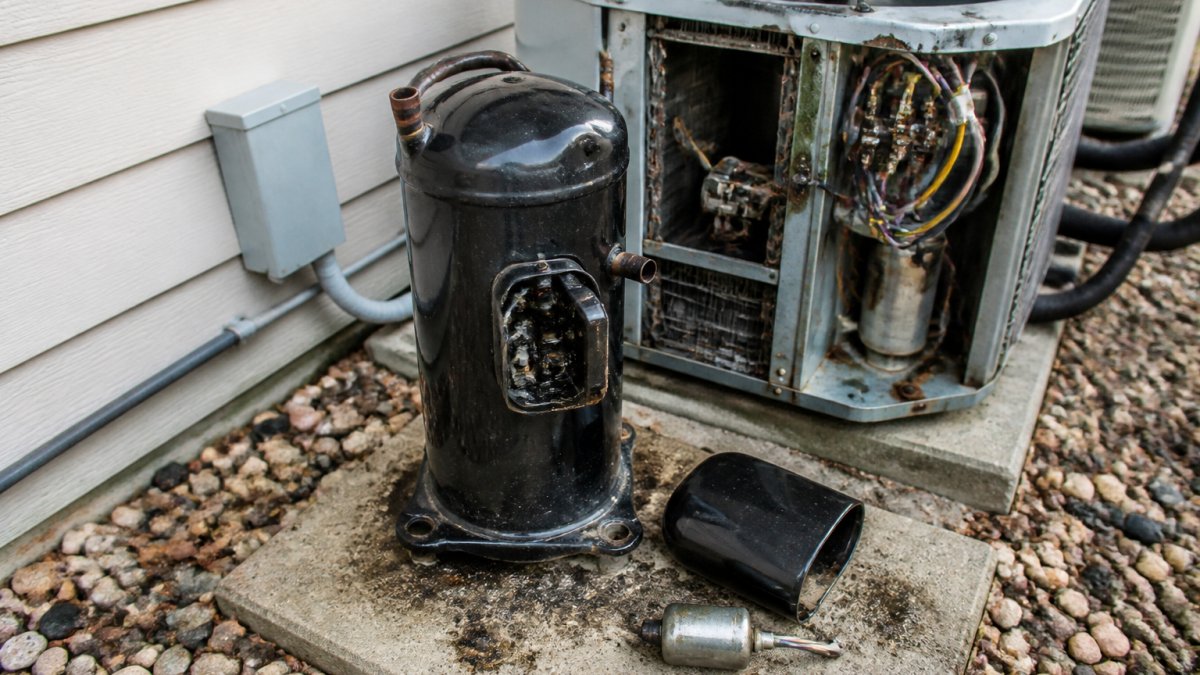
When an HVAC compressor failure occurs, the system stops cooling: the indoor coil blows room-temperature air, the outdoor unit hums or clicks, and the house warms up fast. This guide covers what happens, how to spot it early, and what to do next.
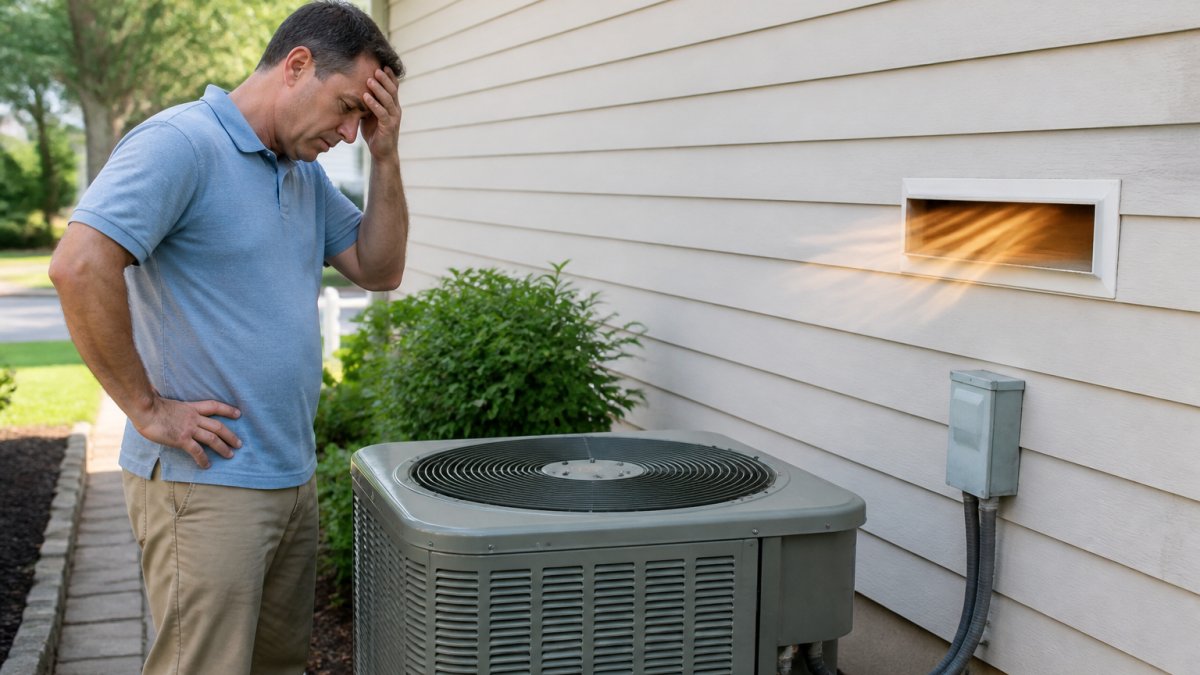
You lose cooling, not just comfort. A seized compressor can trip the breaker and cause repeated short cycles. Sometimes it's repairable; on older equipment, a new AC is often the more practical choice.
AC Compressor Failure Symptoms to Watch For
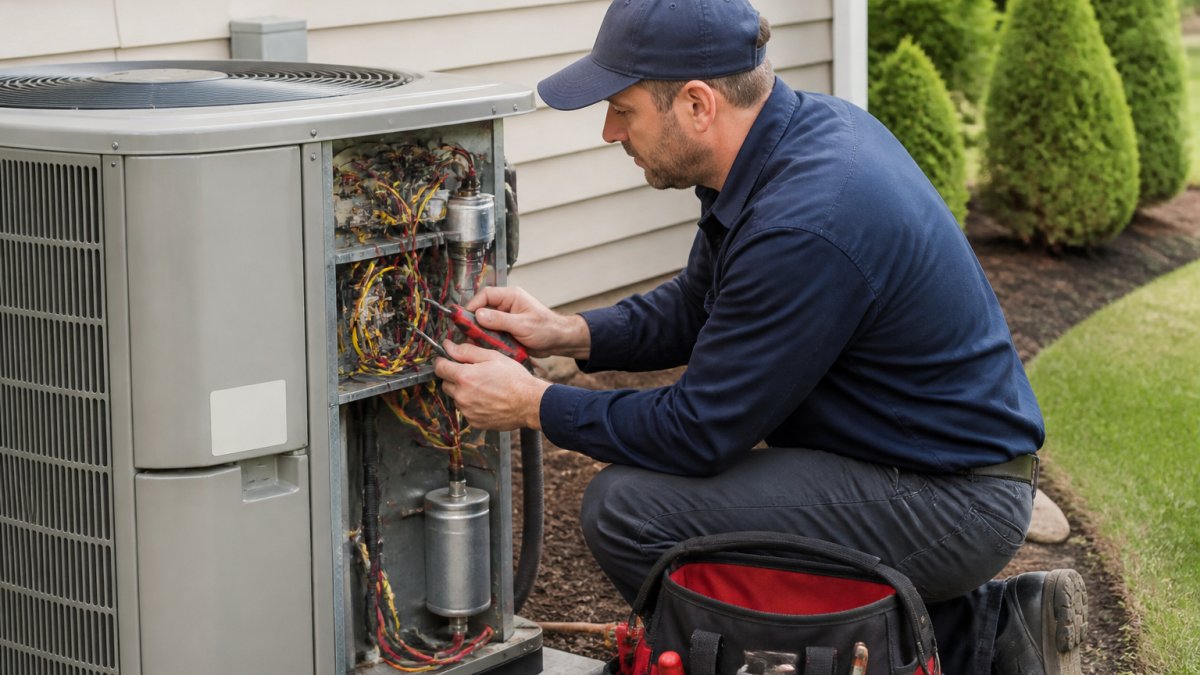
Watch for warm air from vents while the fan runs, loud humming or grinding outside, repeated breaker trips, frosted refrigerant lines, and higher electric bills with less cooling. If the system is already down, our guide on 24 hour emergency AC repair explains what to do first.
Why Is My AC Compressor Not Turning On?
A compressor that won't turn on usually traces to a tripped breaker, failed capacitor, bad contactor, low refrigerant, or a seized compressor. Reset the breaker once, confirm the thermostat is set to cool, and check the outdoor disconnect. Our list of 7 fixes to try first can rule out an unnecessary repair; if those don't solve it, our guide to common HVAC repair problems walks through what each symptom points to.
| Symptom | Likely Cause | What to Do |
|---|---|---|
| Breaker keeps tripping | Seized compressor or short | Stop resetting it, call a pro |
| Humming, no start | Failed capacitor | Test and replace |
| Frosted lines | Low refrigerant or airflow | Diagnose the charge |
What Happens When an HVAC Compressor Fails: Repair or Replace
A failed compressor doesn't always mean a new system. If the unit is young and the rest is sound, a compressor replacement restores cooling; if it's aging and the repair is a large share of replacement, a new AC often makes more sense. A professional diagnosis includes a written recommendation so you can weigh both options.
When a compressor is beyond repair, explore AC replacement and installation. For a straightforward failure, AC repair in North NJ is the faster path. Either way, a professional diagnosis comes first.
Frequently Asked Questions
Can an air conditioner run with a failed compressor?
The system can power on, but it will not cool. The compressor is the part that moves refrigerant and drives the heat-transfer cycle, so when compressor failure occurs, the indoor fan may still blow air that feels room temperature or warm. Running the system in this state adds wear to the blower and electrical components without producing cooling, so it is better to shut the unit off at the thermostat and have a technician diagnose it.
Will a failed compressor stop the AC from cooling completely?
Yes. Without a working compressor, refrigerant cannot circulate, so no heat is removed from your home. You may notice the outdoor unit humming or clicking without the fan spinning, or the breaker tripping repeatedly. Some homeowners describe it as the AC running but blowing warm air. A technician can confirm compressor failure with diagnostic testing rather than guesswork.
Should I turn off my AC if the compressor is failing?
Turn it off at the thermostat and, if the breaker has tripped, leave it off rather than resetting it repeatedly. A failing compressor can draw high current and damage the contactor, capacitor, or wiring. Shutting the system down protects those parts and makes the repair decision clearer once a technician inspects the unit and gives you a written recommendation.
A failing compressor rarely fixes itself. The longer you run a struggling unit, the more damage it can do to the rest of the system. At Tornado HVAC, we offer 24/7 emergency service, professional diagnostics, and clear written recommendations so you know exactly where you stand. We serve homeowners across Bergen, Essex, Morris, Passaic, and Union counties, with locally owned and operated crews ready to help. Get started with Tornado HVAC and schedule service today.